Friday, April 01, 2022

Yatsushiro and Tatami Goza Kyushu Japan

Yatsushiro and Tatami 畳

Jake Davies

The skyline of Yatsushiro, Kumamoto, an unlikely setting for one of Japan's unique cultural products.
The skyline of Yatsushiro, Kumamoto, an unlikely setting for one of Japan's unique cultural products

Yatsushiro is a small city on the coast of Kumamoto Prefecture in central Kyushu. Located at the mouth of the Kumagawa River where it empties into the sea across from the Amakusa Islands, it is not a well-known tourist destination and for most is just glimpsed out of the Shinkansen window.

Once home to a small castle, the town's major landmarks now are the chimneys and industrial structures of a large paper mill. North of the town is a flat, coastal plain covered in fields and paddies dotted with small farming settlements, and it is from here that Yatsushiro produces what is arguably its most important crop, igusa, the type of rush that is used in tatami mats, and of which Yatsushiro produces a full 90% of all that is now produced in Japan.

Tatami mats, the traditional Japanese flooring that was originally only for the elite and wealthy.
Tatami mats, the traditional Japanese flooring that was originally only for the elite and wealthy

Uniquely Japanese

Tatami are the rectangular mats that cover floors in traditional Japanese homes and spaces. They are a uniquely Japanese product, unlike so many that actually have their origins in China or Korea. If Japan had imported the chair from China then maybe tatami would not have even been invented.

In the Heian Period (794-1185) most Japanese homes had dirt floors with straw mats. The wealthy, however, had wooden floors, and tatami was used for seating. By the Muromachi Period (1336-1573), the use of tatami had become more widespread and by now whole rooms would be covered in tatami. By the late 17th century the use of tatami had spread to many commoners' houses.

Small, local tatami workshops still can be found in many towns.
Small, local tatami workshops still can be found in many towns

Tatami Parts

There are three parts to a tatami mat: tatami-doko, tatami-fuchi, and tatami-omote. Tatami-doko is the bulk of the mat, the interior. Traditionally it was compressed rice straw, but nowadays foam, wood-chips, and other materials are often used, sometimes in combination with straw. Tatami-fuchi is the woven brocade strips that cover the edges of the mat. These are woven in a variety of standard designs. Tatami-omote, is the surface of the mat, the woven strands of igusa, and it's from the Yatsushiro area that most of the Japanese igusa now come from.

Flooded paddy in December being prepared for igusa planting.
Flooded paddy in December being prepared for igusa planting

Igusa

Igusa (pronounced igsa, the u is very weak), Juncus effusus, is known as soft rush or common rush in English. It grows naturally throughout the Japanese islands, and is actually found growing over most of the world. Its natural habitat is near water, on river banks, marshy land, etc. As the use of tatami mats spread, the Japanese began to cultivate it, and about 500 years ago the daimyo of Kumamoto gave a license to produce igusa to 5 villages in the Yatsushiro area. In the Meiji period restrictions on who could grow igusa were lifted, but whereas nowadays there is little igusa grown in most of Japan, igusa production flourishes in the Yatsushiro area.

Young igusa shoots growing in paddies near Yatsushiro, Kumamoto. Virtually indistinguishable from a rice paddy.
Young igusa shoots growing in paddies near Yatsushiro, Kumamoto. Virtually indistinguishable from a rice paddy

Paddies

Igusa is grown in flooded paddies, in a similar way to rice, though the seasons are almost opposite. Igusa is panted in late Autumn to early Winter, after the rice has been harvested. The small machines used in the planting and harvesting of igusa are variations on the same machines used for rice. In the Spring a net is stretched over the paddy so that as the plant grows tall the net supports it and stops wind damage. The igusa is harvested in the peak of Summer when it has grown to up to a meter and a half tall.
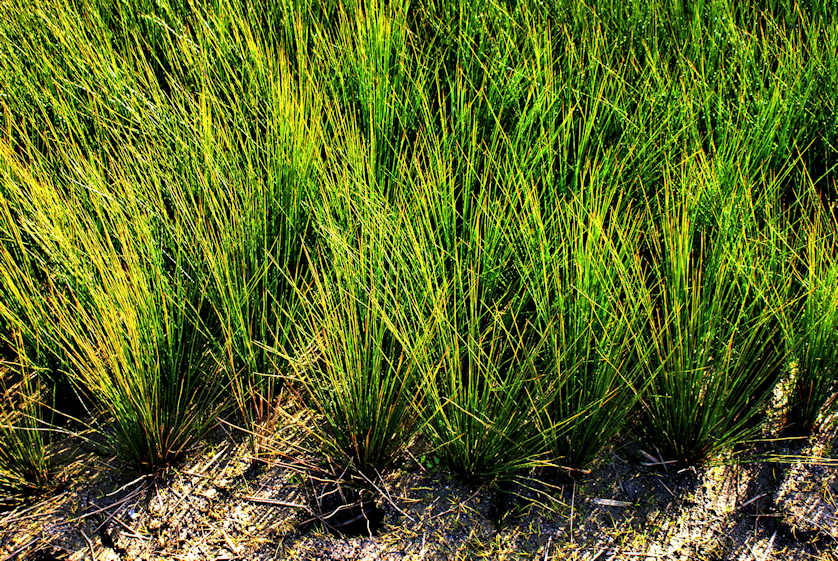
The growing igusa plants will soon need a supportive net.
The growing igusa plants will soon need a supportive net

Processing

After harvesting, the same farming families that grew the igusa also do the processing. First the igusa is dried and then stored in dark conditions. This enables the retention of the light-green color typical of a new tatami mat. Though igusa is only harvested once a year, the weaving of the mats goes on pretty much all year round. Every small village will have several workshops where the "chaka-chaka-chaka" of machinery can be heard. The igusa straw is first graded, then trimmed, and finally woven into mats ready for tatami-makers throughout the country.
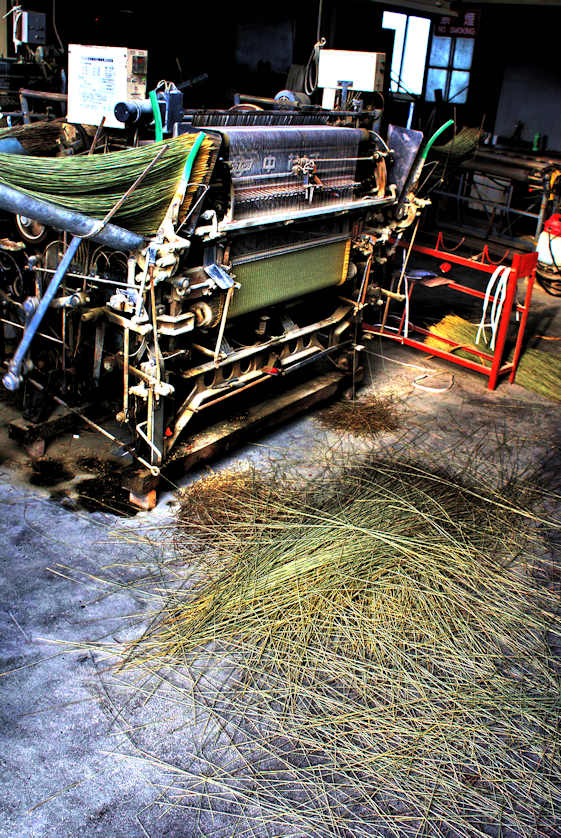
Dried igusa is trimmed and cut to length.
Dried igusa is trimmed and cut to length
The first mechanical looms for weaving igusa into tatami were invented in the 1930s.
The first mechanical looms for weaving igusa into tatami were invented in the 1930s
The final product waiting to be shipped to a tatami maker.
The final product waiting to be shipped to a tatami maker

Purchase Tatami from Japan

Purchase a selection of tatami products from GoodsFromJapan

Japan SIM Cards From Mobal

Get a Japan SIM Card from Mobal

Related Articles on Japan

Daruma Dolls - History & Symbolism

Ema Votive Plaques

Hand Painted Candles

Ishigaki Sea Salt

Japanese Masks

Shichimi Togarashi Seven Spices

Yanai Goldfish Lanterns

Yuzukosho Spice of Kyushu

© GoodsFromJapan.com

Friday, March 11, 2022

Shichimi Togarashi Seven Spices Japanese Seasoning

Shichimi Togarashi - The Seven Spices Blend 七味唐辛子


Shichimi Togarashi - The Seven Spices Blend.
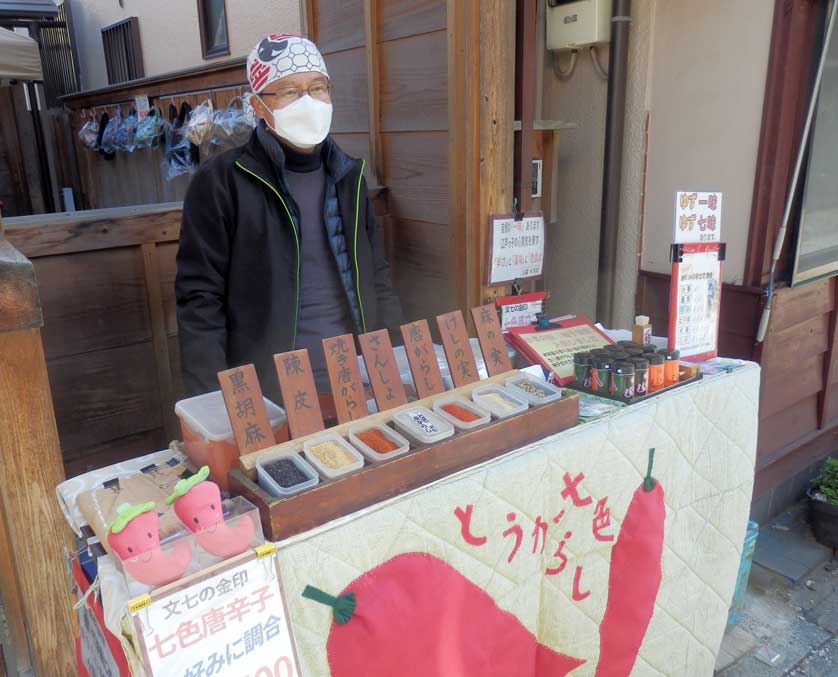
Traditional Shichimi Togarashi merchant in Kawagoe

by Johannes Schonherr

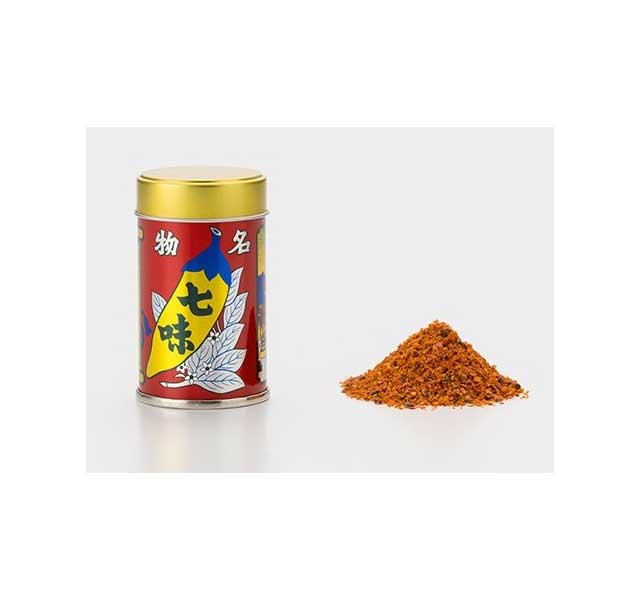
Literally translated, Shichimi Togarashi means seven-flavor chili pepper. Ground red chili pepper is the basic ingredient of any Shichimi Togarashi, making the spice blend spicy.

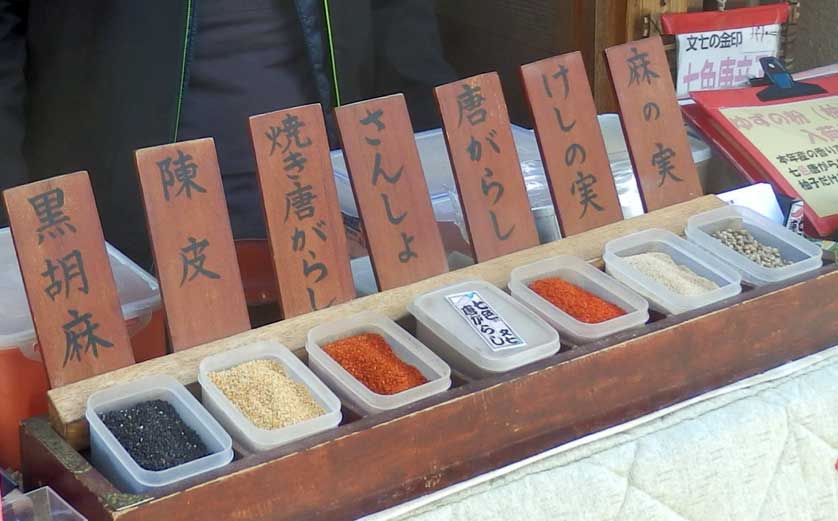
Another typical ingredient is sansho (Japanese mountain pepper, closely related to Szechuan pepper) which is spicy as well. The other spices in the mix however are purely added for flavor and fragrance. They commonly include sesame seeds, hemp seeds and chenpi (sun-dried mandarin orange peel) though each merchant has his own recipe.

Spice palette of a Shichimi Togarashi merchant.
Spice palette of a Shichimi Togarashi merchant

Use of the Spice

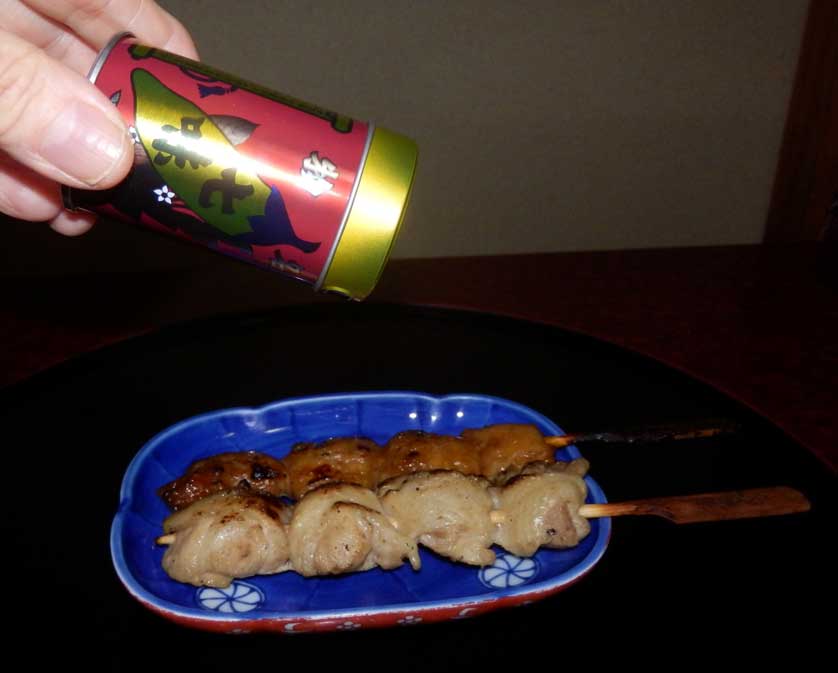
Shichimi Togarashi is a standard condiment offered and much used in udon and soba noodle restaurants as well as in Japanese eel and yakitori restaurants. It also belongs on every Japanese kitchen table for a multitude of purposes ranging from livening up home-cooked soups to hot cheese sandwiches.

Shichimi Togarashi in use on yakitori sticks.
Shichimi Togarashi in use on yakitori

Traditional Purchase

The best way to buy Shichimi Togarashi is purchasing it from a spice merchant near a popular temple or in a busy traditional area such as Tokyo's Asakusa or the historical Koedo (Little Edo) district in the center of Kawagoe, Saitama.

The merchant has the ingredients lined up right in front of the customer, he also provides a chart that indicates the spiciness of the mix - it ranges from "mild" to "extremely spicy". Most customers opt for somewhere in the middle. Often, additional spices, like the very popular dried yuzu peel are also available and can be added on customer's demand.

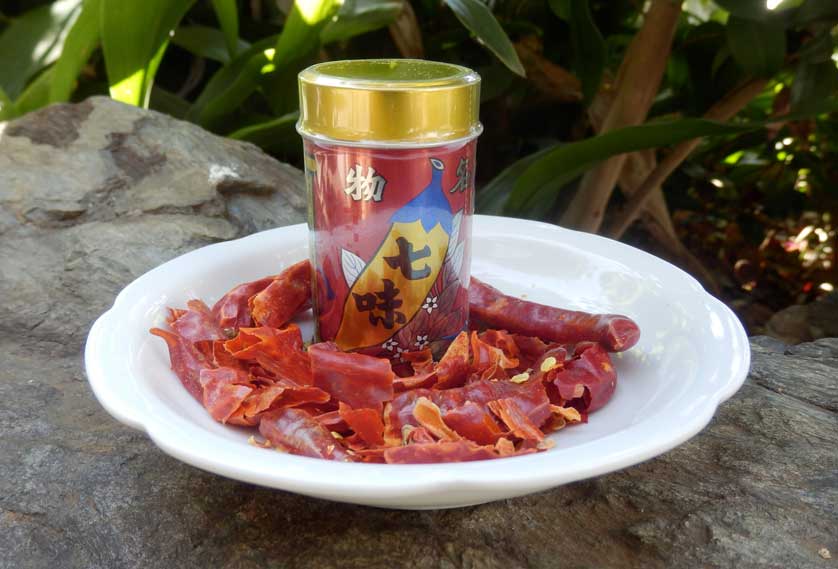
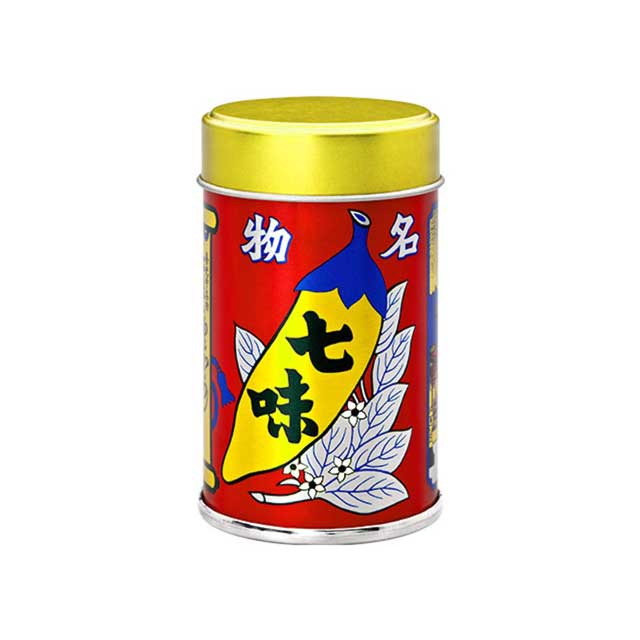
You then see the merchant mixing the spices exactly to your specifications and fill it into the typical Shichimi Togarashi container. That's a small metal can, with a hole on its upper end. The lid has a hole the same size. When using the spice, you turn the two holes to match and, with light shaking, dust the pepper over your meal. Then, you twist the lid again and thus seal the hole tight. The spices inside stay dry that way - even in the midst of the humid rainy season.

Yawataya Isogoro Shichimi Togarashi and dried chili pepper.
Yawataya Isogoro Shichimi Togarashi and dried chili pepper

History of the Spice Blend

Red chili pepper originates from Central and South America, Portuguese missionaries brought the plant to Kyushu in the late 16th century. From there, the pepper spread quickly throughout Japan. Already during the 17th century, herb dealers in Edo (today's Tokyo) included chili pepper into their spice mixes, starting the tradition of Shichimi Togarashi.

Three main versions of Shichimi Togarashi developed, all linked closely to their places of origin: Yagenbori, sold in the vicinity of Sosenji Temple in today's Asakusa district of Tokyo, Shichimiya, sold on the streets leading to Kiyomizudera Temple in Kyoto and Yawataya Isogoro, produced and sold near Zenkoji Temple in Nagano.

Yawataya Isogoro Shichimi Togarashi.
Yawataya Isogoro Shichimi Togarashi

Yawataya Isogoro Shichimi Togarashi

In Edo times, Nagano City was famous for its hemp products as well as for its Japanese washi paper. Traders from Nagano traveled to Edo and other places all over Japan to sell their wares. On their way home, they brought products acquired along the way back to Nagano.

One such trader, a man named Kan'emon, specialized in bringing Shichimi Togarashi on his return trips to Nagano. He soon realized, however, that Shinchu, as the Nagano area was known at the time, offered all the necessary ingredients to produce Shichimi Togarashi right there - with one exception, chenpi (mandarine-orange peel).

Sourcing the orange peel from Kansai, Kan'emon set up his own Shichimi Togarashi shop close to Zenkoji Temple in 1736, thus starting the still operating Yawataya Isogoro Company.

Shichimi Togarashi at GFJ.
Yawataya Isogoro Shichimi Togarashi

Available at Goods from Japan

Yawataya Isogoro Shichimi Togarashi is available in the food section at Goods from Japan. It comes in the classic metal container described above, one container carrying 14g of the spice blend. It's medium spicy and consists of this traditional mix: red chili pepper, chenpi, sesame seeds, hemp seeds, shiso (perilla), sansho (Japanese Mountain Pepper), and ginger.

Hemp seed may not be legal in all jurisdictions. Please check before you order.

Related

Ema Votive Plaques

Calpis

Furikake Tsukudani Rice Topping Kinshobai

Growing Your Own Food in Greater Tokyo

Hoshigaki

Ishigaki Sea Salt

Japanese Mortar & Pestle Suribachi & Surikogi

Jinbei & Samue

Kabosu Juice

Sayama Japanese Green Tea

Yatsuhiro & Tatami

Yuzukosho Spice of Kyushu

© GoodsFromJapan

Monday, January 24, 2022

ランドセル人気 再燃!

ランドセル人気 再燃!

ランドセルが海外で人気らしい。

ハリウッド・セレブが肩掛けして持ち歩いたり、ゲイの男の子にも人気のファッションアイテムなんだって。

昔はそうじゃなかった。1990年代に来日した海外の友人たちは口々にこう言ったものだ。

「なんで日本の小学生はあんな重いリュック、背負わされてるの!?」

「まるで軍隊みたいだよー」

尋ねられても何も答えられなかった私。

自分も子供もランドセルと共に学童期を過ごしたのに、あの風変りなリュックを何で背負わされていたのか、わからない。ただ何の疑いもなく背負い続けていた。

ランドセル人気 再燃.

「ランドセル」という名前は、オランダ語の「ランセル」から来ている。明治18年に軍隊用の背のうを学習院が通学用のカバンに採用したのが始まりだそうだ。以来、日本では小学校での6年間、ほとんどの子が入学祝いに買ってもらったランドセルを使い倒す。世界広しといえども、これは日本独自の文化と言っていいだろう。

1年生の時は背中で揺れるほど大きくて、逆に6年生になると背が伸びた子には小さすぎてちょっと間抜けに見える。不都合はなくはない。なのに、なぜずっとすたれなかったの、ランドセル文化? 

ランドセルはとにかく丈夫だ。そして、使いやすい。バッコンバッコン中に何でも入る。

プリントやファイル、教科書、地図帳、図書館で借りてきた偉人の伝記本、そしてカバンの底には給食の残りのコッペパンが押し込められているのがお決まり。

ランドセルを開けると、皮革独特の獣臭い匂いと乾いたパンくずの匂いが入り混じって鼻を衝き、なんとも言えなかったっけ。

少しぐらい乱暴に扱っても壊れない。鉄棒や雲梯をいち早く使いたくて、放課後のチャイムが鳴るやいなや、校庭に走りランドセルをぽーんと放りなげた経験は誰にでもあるだろう。

うちの子は男の子で乱暴だったから、ランドセルの肩紐が切れて一度修理に出した。一週間ほどで新しい肩紐が付け替えられて戻ってきた。そのランドセルは、その後彼が小学校を卒業するまでの間、背中で黒光りを放ち続けた。卒業と共に、たしか東南アジアの子供たちに寄付したと思う。今も彼のランドセルは海外で活躍しているはずだ。

海外へのお土産、プレゼントしても最適。ランドセルは、やはり色・形・デザインも豊富な日本製を選びたい。Goods from Japan は直接海外にお好きなランドセルをお届けします。

ご購入はこちらから→ Purchase Randoseru from Japan 

Randoseru now come in a variety of colors
Randoseru


Related

Randoseru Japanese Satchels

© GoodsFromJapan

Tuesday, November 30, 2021

I'm a Cat

I'm a Cat

『吾輩は猫である』は言わずと知れた明治の文豪、夏目漱石の傑作。主人公の猫の視点から浅はかな人間世界を描いたカリカチュアだ。

英語のタイトルは “I'm a cat." まあそのまんまなんだけど、これで言い得ているかなーというとちょっと微妙。猫のあの高慢さ、上から目線な感じは「吾輩」と自らを称するところに集約されていると思いませんか? それがI'm a cat. になるとペーソスよりもコミカルさが勝ってしまうような気もする。一度ぜひ全編を英語で読んで確かめてみたいものだ。

I am a CatI am a Cat

I am a cat.

I'm a cat named 'Taikan'.

最近は猫のブログや動画も大流行で、巷にはかわいい猫ちゃんたちがたくさんアップされている。まさに 百花繚乱の“I'm a cat." ワールド。中には犬みたいにお手をする猫もいたりして、日本の猫も変わったなーと思う。猫は自由奔放、勝手気ままが本性なのだけれど、内(うち)猫として屋内に閉じ込められているとそうもいかず、愛玩動物としての行動を強いられているようにも見える。

私の実家では、昔からずっと猫を飼っていた。昔の農家には米蔵があって、ネズミを退治するのに猫はいて当たり前の存在だった。そんな猫たちは半野良。好きな時間に出かけて行って、好きな時間に家に帰ってくる。毎日が自由気ままな日々。縦横無尽に野生を謳歌していたなあ。

ある猫は、捕まえたネズミを夜中家族に見せびらかしに来たり、ある猫は押し入れの布団で5匹も6匹も子を産み落としたり。父の軽トラに乗って遠くに行ったきり、行方不明になってしまった猫もいた。諦めかけた一週間後、国道を渡って帰ってきて、「あらー、帰ってきたのぉ!」なんて、皆で大喜びした日もあった。猫と一緒の暮らしは飽きることなく楽しかった。

3代目ミーは、ある日、隣の養鶏場の庭にまかれていた農薬を食べて死んでしまった。自滅。桶に突っ込んでおぼれて死んでしまった『吾輩は猫である』の主人公と同じだ。自由気ままに生活を楽しんだ末の最後。悲しかったけど、感心した。母の口癖は「賢い猫は決して死ぬところを見せない」だった。私は私、好きなようにいたします、お先に。猫の矜持がそこにある。

Maneki neko from Seto, Aichi.
Buy maneki neko from Seto-shi, Aichi

海外でも人気、招き猫グッズはこちらから↓

Purchase maneki neko from Japan

Video

Monday, November 29, 2021

Kyoto Noren Curtains Japan

Kyoto Noren 京都ののれん

Kyoto is particularly famous for its production of cotton and silk kimono and obi (belts). The centuries of acquired expertise in the fields of design, dyeing, and fabric weaving are also evident in Kyoto's famed noren.

Striking orange noren outside a hotel housed in a traditional machiya.
Striking orange noren outside a hotel housed in a traditional machiya

Perhaps nowhere in Japan are noren curtains as much in evidence as Japan's ancient capital. Nearly every shop of business seems to have a noren curtain outside its entrance. Indeed some businesses such as hairdressers would never have a noren in other Japanese cities. It would be considered far too old-fashioned.

Kimono & Tea Ceremony Maikoya.
Kimono & Tea Ceremony Maikoya

In Kyoto, however, tradition is trendy and even the most contemporary-looking hairdressers or boutique hotel may well have a traditional noren curtain hung outside.

Colors and shapes vary, though plain black and white, in the best traditions of wabi-sabi, seems to predominate. At night, too, white is easily visible.

Even hairdressers in Kyoto may have a noren curtain.
Even hairdressers in Kyoto may have a noren curtain

Here the calligraphy adds interest to the design.
Here the calligraphy adds interest to the design

Simple black and white design.
Simple black and white design

Salon de gigi dog salon
Salon de gigi dog studio

Nazuna, Kyoto.
Nazuna, a traditional Japanese inn, near Nijo Castle

Contact GoodsFromJapan to have your own noren designed and made in Kyoto.
Contact GoodsFromJapan to have your own noren designed and made in Kyoto

Kyoto noren.
Kyoto noren

Venichu
Housing materials company

Goods From Japan sells a variety of noren or we can design and create your own.

Contact GoodsFromJapan to have your own noren designed and made in Kyoto.

Related

Noren in Tohoku

Ema Votive Plaques

Japanese Craft Stores in Kyoto

Moss Temple Saihoji

Ema votive plaques in Japan.
Ema

© GoodsFromJapan.com

Tuesday, October 26, 2021

Randoseru Japanese Elementary School Backpacks

Randoseru

Randoseru (ランドセル) are stiff, leather backpacks used by Japanese elementary school children from ages 6 to 12.

They are exceptionally well-made and are expected to last for the whole of a child's elementary school education.

The range in price up to 800 USD for the very best made-in-Japan quality.

Randoseru
Randoseru

The Name

The origin of the loan word randoseru is not clear. It may derive from the German Ranzen or Dutch ransel which both mean "backpack" or "satchel".

Another possibility is that the word comes from the German Landser or soldier as the Japanese backpack has some similarity to a Landser's equipment bag.

The practice of elementary children carrying randoseru began at the Gakushuin (学習院) or Peers School in Tokyo, at the time an elite institution for educating children from the highest levels of Japanese society.

Randoseru now come in a variety of colors
Randoseru now come in a variety of colors, though black and red are standard

Colors

Randoseru now come in a variety of colors but the standards are navy blue or black for boys and red for girls.

Yellow covers are sometimes seen over the backpack to protect them from the rain and also to increase visibility on roads where there are no sidewalks.

They can be found all year round in department stores but are often purchased in the spring before the school year begins in April.

Contact Us

The best randoseru are hand-made in a time-consuming process.

GoodsFromJapan has randoseru on sale or if you are looking for a specific color please contact us.

Order a randoseru from GoodsFromJapan
School satchels on sale in a department store

Related

ランドセル人気 再燃

© GoodsFromJapan

Thursday, October 14, 2021

We love Natto! Japanese Health Food

We love Natto!

先日、東京農工大の研究グループが、納豆に含まれる成分に新型コロナウイルスの感染を阻害する効果があるとの実験結果を発表しました。

これ、本当だったら嬉しいですよね。納豆生産のお膝元、茨城県で生まれ育った私にはかかせないご飯のお供。これでコロナを予防できたら百人力です。

真偽のほどはまだ検証を要するでしょうが、納豆が体の免疫力を高める栄養食品であることは確かです。

We love natto!
納豆
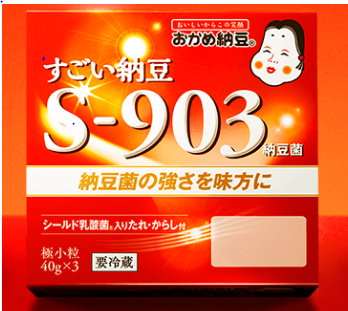
S-903
コロナにも勝つ? 注目の納豆菌 S903


納豆神話のもう一つに「外国人は納豆が苦手」というのがあります。

果たしてこれ、本当でしょうか?

確かに最初はもちろんあの独特の匂いにやられて、鼻をつまむ人は多いです。

でも私の知る限り、一度食べ慣れると、外国の方も結構 Natto 好きですよ。

「安いし、お腹にたまるし、サイコー!」なんて言ってます。

英国人やオーストラリア人にはしょっぱさが Marmite というビール酵母を主原料としたスプレッドに似ているらしく、懐かしさも感じるようです。

日本は諸外国に比べて物価が高いので、スーパー等で買い求めやすいのも魅力。

納豆大使としては、このコロナ禍、ぜひ納豆でみなさんの健康を維持していただきたいです。

生の納豆は輸出できませんが、海外にも送れる人気のフリーズドライ納豆、納豆パウダー、サプリをご紹介します↓

Natto Supplement Capsules | Goods From Japan

Natto
Natto Supplement Capsules


外国に住む日本の方へのプレゼントにも喜ばれますよ。

私のお友達は、英国でなんとか納豆を自家製造しようと日々格闘しています。大豆を買い込み、ヨーグルトメーカーに放り込んで、菌を混ぜ込み、ひたすら発酵待ち。。。

納豆はまさに毎日食べずにいられないdaily foodsなんですね。お豆腐みたいに、早く外国のスーパーにも置いてほしい!

Natto
Natto Powder

Natto Supplement Capsules | Goods From Japan

Natto Powder | Goods From Japan

Monday, October 11, 2021

Japan's Wholly Edible Organic Banana

Japan's Wholly Edible Organic Banana

We think we know bananas, but you don't know them properly until you've met the "Next 716" from Miyazaki Prefecture in Japan. This very expensive banana is not only cultivated organically, i.e., completely chemical-free, but you can also eat the skin!

Next 716 organic Japanese banana in its own box.
"Next 716" organic Japanese banana.

We splashed out and tried a "Next 716" at our local supermarket here in Tokyo. It looked beautiful and, this being Japan, it was beautifully packaged in its own special box.

As you can see from the photo of the banana in the box, it wasn't quite ripe when we bought it, so we gave it four or five days.

When it had turned a beautiful golden-yellow, we cut it up - skin and all - and put it on our breakfast. 

A ripe Next 716 organic Japanese banana.
A ripe "Next 716" organic Japanese banana.

We were most interested in how the skin would taste. Well, it certainly wasn't as sweet as the deliciously sweet banana itself, but it wasn't face-screwingly bitter either. In other words, they had done a pretty good job of making the skin edible.

And, of course, with no chemicals used in cultivating the banana, there is no risk of ingesting chemicals by eating the skin.

Would we buy the "Next 716" again? Yes, if we were trying to impress a visitor with a uniquely Japanese product! (Or, should we say, a uniquely Japanese version of what is originally a South-East Asian product.)

The "Next 716" was by far the most delicious banana we've ever tasted and is a lesser-known food delicacy that any visitor to Japan should try.

Buy Japanese Food Products From GoodsFromJapan

Friday, September 17, 2021

変なホテル henn na Hotel は変じゃないホテルー仙台

Henn na Hotel

先日オープンしたばかりの「変なホテル 仙台国分町」に泊まってきました!

まず、何が変かというと、ホテルに入るといきなりロボットのホログラムがお出迎え↓

変なホテル henn na Hotel

非対面式のチェックインです。最近、病院とかでも多いですよね。

タッチパネルに打ち込んで受付は簡単に済ませられます。

これ何がいいかと言うと、コロナ感染予防はもちろん、いちいちホテルに出入りするときの鬱陶しさがない!

受付の人に「行ってらっしゃいませー」とか「お帰りなさい!」とか言われるの、サービスだとわかってはいるけれど、見張られているようで嫌な時ありますよね?

それがないので、泊まる身にはストレスフリーです。

さて、お部屋の中はこんな感じです。全然変じゃない!

それどころか、最新鋭の設備で超居心地いいです。

変なホテル henn na Hotel

まず、枕が最高。LOFTYというブランドのホテルピローを採用しています。

身長154cm、頭は平均的日本人絶壁型の私が数年ぶりによく眠れたなーと思いました。

正直、お取り寄せも考えています。

Amazon.co.jp : LOFTY 快眠枕 ホテルピロー 高さ:標準 (M) ホテル仕様 リバーシブル (綿・パイプ) 洗える まくら (洗濯機対応) 安眠枕 : ホーム&キッチン

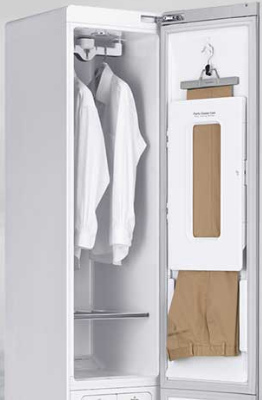
もう一つは、クリーニングマシーンのLGスタイラー。

着た洋服をハンガーにかけておくだけで、嫌な臭いやしわを蒸気が除去してくれます。洋服をリフレッシュして翌朝は出発。旅先で洗濯をする暇がない時など、便利ですよね。除菌コースもプラスできるので、コロナ禍での旅では心強い味方!

変なホテル henn na Hotel

ということで、「変なホテル henn na Hotel 」は全然変なホテルじゃありません。

オープンしたての今は、ダブルルーム1泊1名 5,063円~。(2021年9月現在)

平日ということもあり、学生や若者のゲストが多かったですが、サラリーマンや大人のカップル旅にこそ使ってほしい。コスパ最高のホテル、お薦めです!

www: 変なホテル henn na Hotelを予約

hen na Hotel - Vol 2

Wednesday, September 15, 2021

Noren in Tohoku

Noren in Tohoku

Tohoku (東北) is the name for northeast Japan. The region consists of the following prefectures - Akita, Aomori, Fukushima, Iwate, Miyagi, and Yamagata.

Noren from Tohoku
Noren from Tohoku

Sendai, the largest city, on the Tohoku Shinkansen from Tokyo and Ueno stations is regarded as the main gateway to the region.

Tohoku is known for its apples in Aomori, rice and sake in Akita, fine food, craft beer (hops are grown here), beautiful women, and largely impenetrable accents.

Tohoku curtains
Noren in Tohoku showing a family crest or mon

The noren curtains you will see outside shops and businesses in the area reflect Tohoku's distinctive culture and its many festivals. In particular, Tanabata in Sendai, Neputa in Hirosaki, and Nebuta in Aomori city are major annual festivals. All draw thousands of visitors in a normal year.

The goldfish nebuta lanterns seen in the first and last photograph are believed to ward off bad luck. The lantern floats of the Nebuta festival itself are a common motif as are dragonflies and the mon (crests) of the one-time feudal lords (daimyo) of the region.

Tohoku noren curtains

Noren curtains hung outside a shop or restaurant indicate whether it is open or not. They also define a transition from a public to a more private and intimate space.

Goldfish noren
Goldfish nebuta lanterns ward off bad luck

Related

Kyoto Noren

© GoodsFromJapan.com

Tuesday, December 31, 2019

Custom Happi Ideas For 2020

Custom Happi Ideas For 2020

With the Tokyo Olympics on the horizon many people and businesses will be thinking of having custom happi coats made if traveling to Japan for the big event.

Custom Happi Ideas For 2020

Pricing depends on 1) the number of colors, 2) the complexity of design, and 3) the number of coats. Making the first coat is always the most expensive step and the per unit cost drops with the number of coats.

Happi Ideas For 2020.

Usually it takes between 4-6 weeks to complete the order.

Designs should be sent in Adobe Illustrator format please.

Design image.

Please contact us for a custom happi quote and further details.

Customer's design.

Read more about Japan's favorite festival wear

2018 Custom Happi

© GoodsFromJapan.com

Friday, January 12, 2018

Custom Happi Coats 2018

Custom Happi Coats 2018

If you would like a custom happi coat made for your group or circle please contact us.

Custom Happi Coats 2018.

The happi coats become cheaper the more you have made and an order of 20 or more can work out very reasonable indeed.

Our happi coats are made in Kyoto by a family business that has been producing festival happi coats for generations. They do not have a template but can work with an image or full description sent by the client.

We look forward to hearing from you.

Custom Happi Coats 2018.

Read more about Japan's favorite festival wear

Custom happi 2020

How to order a custom happi coat from Japan

© GoodsFromJapan.com