Friday, October 20, 2023

Ibaraki Suisha Senkou Incense From Japan

Ibaraki Suisha Senkou Incense 水車線香

Ibaraki Suisha Senkou Incense
Buy incense from Ibaraki Prefecture

Incense has a long history in Japan. Ritually smoldered for its fragrance in India and China since the most ancient of times, incense was introduced to Japan in the 6th century, along with Buddhism. Incense quickly caught on at the Japanese Imperial Court. By the time of the Heian Period (794 - 1185), incense had become a vital part of life at the court. People celebrated its fragrance, people wrote poems about the beauty of the aroma. Ancient woodprint images show people gathering in the gardens of the court, enjoying the pleasure of the smells while holding poetic parties.

Samurai culture adopted incense. Warriors purified their minds and bodies with incense before heading into battle.

Waterwheel at Komamura Seimeido.
Waterwheel at Komamura Seimeido

Kodo 香道

In the 16th century, a century of much turmoil and many wars, a ceremony known as kodo (the Way of Incense) developed, alongside other by now classical Japanese ceremonies like the Tea Ceremony and Ikebana (flower arrangement).

Kodo was (and is) as strictly regimented as the Tea Ceremony with its very own set of tools and rules.

However, Kodo never caught on with the public the way the Tea Ceremony and Ikebana did.

For a very simple reason: the incense used at the Imperial Court and by the upper samurai had always been made from agarwood and / or sandalwood. Those fragrant woods had to be imported from South-East Asia or even India via China and Korea. They were incredibly expensive and only the Imperial Court, the richest of the temples and the richest of the samurai could afford real kotoboku, the most precious high-grade incense.

Buddhism had however spread all over the country, Buddhist ceremonies had become a part of daily life. All those many temples needed incense for their regular ceremonies - and they were in no position to acquire the agarwood the Imperial Court used. Thus, they turned to local sources. Cedar, lavender and other home-grown fragrant leaves and plants became the base of their incense.

Mt Tsukuba, Ibaraki Prefecture.
Mt Tsukuba, Ibaraki Prefecture

Incense Today

Today, incense is still an integral part of any Buddhist ceremony. But more and more frequently, people use incense without any religious connotation.

They use incense sticks to clean their homes from other smells, they use them to enjoy the fragrance, or perhaps to enhance the olfactory environs when being with a partner in a romantic night. The latter being quite in accordance with the use of the fragrance in Heian times.

Walking into any Japanese supermarket or drug store presents you with a variety of incense made by major manufacturers.

But as always, there are the mass-produced products and there are the ones that have their own distinct fragrance, that have their own history, their own story.

The traditional waterwheel at Komamura Seimeido.
The traditional waterwheel at Komamura Seimeido

Suisha Senkou 水車線香

Suisha Senkou is the brand name of the incense made at the small family-run Komamura Seimeido factory deep in the countryside outside of Ishioka, Ibaraki Prefecture. Cedar leaf incense is the main product of the facility though other types of incense are manufactured as well.

Suisha Senkou translates to "waterwheel incense" and indeed, an ancient watermill plays an important part in the production process.

Located at the foot of Mount Tsukuba, the Komamura Seimeido is surrounded by forests and rice paddies. A very quiet area in central Ibaraki. Not really that remote from Tokyo (you can easily go there on a day trip from the city), but far away enough to be able to stroll through the rice paddies and seeing nothing but an open sky above the landscape. No high-voltage powerlines in view at all.

Right behind the small Komamura Seimeido family farm house compound, a clear little mountain stream flows by. Coming down from Mount Tsukuba, the stream flows at a pretty good speed.

That mountain stream powers an ancient waterwheel which in turn powers the mill that slowly but steadily pounds the cedar leaves used as the base of the incense sticks. The slow, water-driven pounding process brings out the full aroma of the leaves.

The Komamura Seimeido uses the ancient watermill for exactly this reason. It has been doing so for more than 100 years by now.

All ingredients, most importantly the cedar leaves are local, no chemical agents, no glue is added at all.

One small building houses the processing factory. The machines there look pretty vintage as well but are clearly from the later part of the 20th century, running on electricity.

The water-powered mill.
The water-powered mill

There, the cedar powder is turned into a hot mash which then gets pressed into thin sheets. Those sheets are immediately mechanically cut the size of incense sticks.

After a period of drying, they are wrapped up into packages ready for sale.

If you make an appointment, the master of the house will show you all the details of production himself, he will answer all your questions, and you will be able to burn a few incense sticks of various kinds to make an educated choice of what to purchase.

Cedar leaves ready for processing.
Cedar leaves ready for processing

Incense Variety

While cedar leaf incense is the main product, locally grown Tsukuba lavender, mikan (mandarin orange) peel and chrysanthemum incense are also manufactured and ready for purchase.

While a trip to the Ibaraki countryside and a visit to the Komamura Seimeido is certainly a pleasure, you can also purchase Komamura Seimeido Suisha Senkou also conveniently from Goods from Japan.

Ishioka incense.
Ishioka incense

Buy Incense From Japan

Goods from Japan offers a variety of Japanese incense.

Purchase a range of Japanese incense from GoodsFromJapan.

A worker at the press and cutting machine.
A worker at the press and cutting machine

Related

Aizuwakamatsu Hand Painted Candles

Calpis

Daruma Dolls - History & Symbolism

Ema Votive Plaques

Happi Coats

Ishigaki Sea Salt

Japanese Mortar and Pestle

Kaki no Tane

Masu Wooden Sake Boxes

Ramune

Sayama Green Tea

Shichimi Togarashi

Yanai Goldfish Lanterns

Yatsuhiro & Tatami

Yuzu Kosho Spice from Kyushu

by Johannes Schonherr

Vintage Komamura Seimedo Sign.
Vintage Komamura Seimedo Sign

© GoodsFromJapan.com

Monday, October 16, 2023

Reflections on Tsuda Umeko by Oba Minako

Reflections on Tsuda Umeko: Pioneer of Women's Education in Japan

Reflections on Tsuda Umeko

by Oba Minako

Japan Publishing Industry Foundation for Culture (2021)

ISBN: 978-1-60598-071-3
263pp; hardback

Reflections on Tsuda Umeko.

On December 23, 1871, six-year-old Umeko Tsuda was put on a boat along with four other young Japanese girls and sent from Tokyo to America, tasked with the responsibility of learning the English language and American customs. She was part of the famed Iwakura Mission, assembled to renegotiate unequal treaties that Japan had signed, garner recognition for Emperor Meiji's newly reinstated imperial dynasty, and study America and its structures and systems.

By the time Tsuda returned 11 years later as an American high school graduate, Japan had lost much of its fire to learn about America and its ways, and Tsuda was met with neither excitement nor contempt, but mostly indifference. Instead of just melting back into Japan's everyday life, she took it upon herself to try to bring Japan, at least in terms of educating its girls, into modern times.     

Starting as a lowly teacher, Tsuda soon decided that she needed more education if she was to help Japanese women become full participants of society. She returned to America, graduated from Bryn Mawr College and came back to Japan where she started Joshi Eigaku Juku (Women's Institute for English Studies) to provide opportunity for a liberal arts education for all women. The school eventually became Tsuda University, and it is still one of Japan's top private universities.

Although Tsuda's accomplishments have long been well known in Japan (enough to be honored by her likeness being printed on the redesigned ¥5,000 note to be released in July, 2024), knowledge of her thinking, emotions and motivations were not. That changed in 1984 when a box of more than 400 of Tsuda's letters to her American host mother, Adeline Lanman, were discovered stuffed in an attic trunk at Tsuda University.

This discovery was partially what prompted the writing of this book by Akutagawa Prize-winning author Minako Oba, herself a Tsuda College graduate. Oba sprinkles her insights/opinions into the passages she took from Tsuda's letters to add context.

Tsuda led arguably the most interesting life of any Japanese woman born during the 19th century. During her 64 years preceding her 1929 death, she met luminaries such as U.S. president Teddy Roosevelt, Florence Nightingale, Helen Keller and many or even most of Japan's political elite of her times, including her time living with the family of Ito Hirobume when he became Japan's first prime minister in 1885.

Ito went on to be prime minister of Japan four times, and is a historical figure known to all Japanese. He was on the original Iwakura Mission, which is where he met Tsuda.

Even those not interested in Tsuda specifically will learn much from this book about Japan's 19th century thinking, culture and living conditions from Tsuda's keen observations and insights.

The book has something for pretty much everybody, and there are abundant historical tidbits which Japanophiles will surely find interesting.

As an example, Tsuda said in one of her letters that Ito was interested in Christianity and “was very angry when the newspapers wrote that he had advised the emperor to accept Christianity and all the ministers were in favor of the idea." I doubt you will find that in any textbook.

Tsuda herself had become a Christian in America.

Note: Those wanting more on Tsuda and the Iwakura Mission should check out the book Daughters of the Samurai, written by Janice P. Nimura.

Review by Marshall Hughes.

Buy this book from Amazon USA | UK | Japan

Looking to buy Japanese things directly from Japan? GoodsFromJapan is here to help.

More Japan Book Reviews

All About Japan - Stories, Songs, Crafts and Games for Kids

Black Ships Illustrated Japanese History

Christianity Social Justice And The Japanese American Incarceration During World War II

Diary Of A Void

Exposure: From President to Whistleblower at Olympus

Into Japan A Starter Kit

Japanese Kokeshi Dolls: The Woodcraft and Culture of Japan's Iconic Wooden Dolls

Japanese Dolls: The Fascinating World of Ningyo

Kuni: A Japanese Vision and Practice for Urban-Rural Reconnections

Off the Beaten Tracks in Japan

Onomatope: The Fantastic World of Japanese Symbolic Words

Satsuma Rebellion - Illustrated Japanese History

Wednesday, September 13, 2023

90-Day Geisha by Chelsea Haywood Book Review

90-Day Geisha

90-Day Geisha

by Chelsea Haywood

Pegasus Books LLC (2009)

ISBN: 978-1-60598-071-3
Paperback, 309 pp

90-Day Geisha Book Review.

After being an international model and becoming bored with that, what is a 19-year-old girl to do?

How about move to Tokyo on a 90-day tourist visa and get a job in a hostess bar? Bring your newly-wedded husband along and start taking notes so that you can write a book about your experiences. Oh, and call yourself a geisha instead of a bar hostess to give yourself some allusion of charm, grace or class.

The goal of the book is to describe what life is like being a Tokyo geisha, er, hostess, ie what hostesses do, what kind of girl/woman signs up for it, and what kind of man visits these bars.

Much of the book is spent talking about the author's customers, and let's just say that none of them come off looking very good, despite being, if she is to be believed, among Japan's very upper crust. She dubiously claims her clients were billionaires. At the time the book was written, Japan had only thirty some billionaires. Haywood seems to want to make the reader think she is tempted to dump her husband and run away with a coke head customer, but this appears, even on the surface, to be highly contrived.

The author can be forgiven for some of her ignorances of Japan as she supposedly lived in the country for only three months (the length of her visa), but annoyances pop up a bit too often for readers who know Japan well. She translates gaijin as "foreign devil" when the word means merely "outside person." The area Shin Okubo is repeatedly called Shin Okobo. There are a few others missteps, too.

Three or four times, Haywood tries hard to impress the reader with overly flowery language, and it seems likely that these sections were ghost written. She thinks of herself as an intellectual giant, but most readers probably won't buy it. Her husband is also held up for his great brainpower. At one point she says of him, "He is the E to my mc2."

So, what was husband Einstein's job? Well, he was walking the streets of Roppongi trying to get girls to sign up to be hostesses and strippers. I am not sure what academic qualifications are needed for that rigorous profession.

While this review has tended towards the negative, some readers, especially those with only a basic knowledge of Japan and hostess bars, might find the book interesting, informative and insightful. Throw in a little salaciousness and some will be clicking on the "buy now" button. The book does get numerous inexplicably positive reviews on some web sites.

At 309 pages, 90-Day Geisha becomes a bit repetitive. If the author just took out the lines reading, "Chelsea, you are the most intelligent and beautiful woman I've ever met," and sentences approximating that, perhaps the book would only be about 250 pages. Haywood tries to partially camouflage her pretentiousness and arrogance, but her ego won't let her try very hard.

In short, the book has its merits, but long-time Japanophiles will likely want to give it a miss.

Final note: In an interview with a Canadian weekly news magazine in December, 2009, not long after the book was published, Haywood says that she and her husband were in the process of getting divorced. What a shocker.

Review by Marshall Hughes.

Buy this book from Amazon USA | UK | Japan

Looking to buy Japanese things directly from Japan? GoodsFromJapan is here to help.

More Japan Book Reviews

All About Japan - Stories, Songs, Crafts and Games for Kids

Diary Of A Void

Exposure: From President to Whistleblower at Olympus

Into Japan A Starter Kit

Japanese Kokeshi Dolls: The Woodcraft and Culture of Japan's Iconic Wooden Dolls

Japanese Dolls: The Fascinating World of Ningyo

Reflections on Tsuda Umeko: Pioneer of Women's Education in Japan

The Snow Woman and Other Yokai Stories from Japan

Tokyo Outdoors: 45 Walks Hikes & Cycling Routes

Thursday, August 03, 2023

Saihoji Temple Kyoto Application

Saihoji (Kokedera) Temple 西芳寺

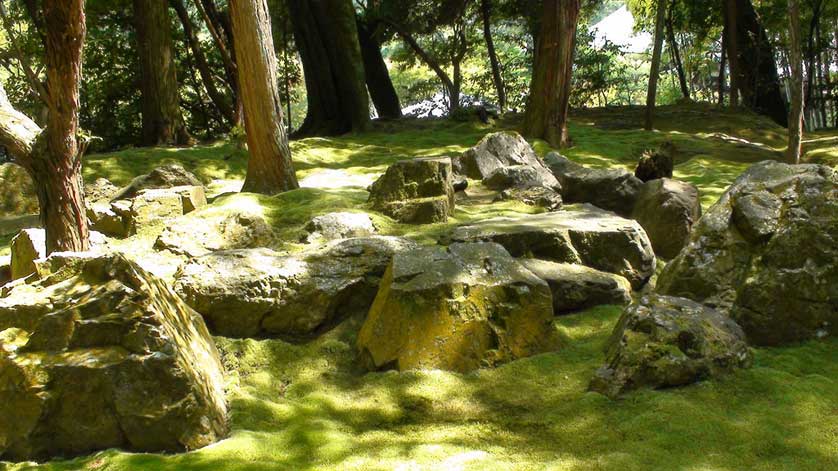
Saihoji Temple - or, as it is more commonly known: Kokedera (苔寺 "moss temple") - was founded in the fourteenth century and is located on a spacious 2 hectares (4.5 acres) in Matsuo, south west Kyoto, 800 meters (half a mile) south west of Matsuno-o Shrine (Matsuo Taisha).

Moss at Kokedera in western Kyoto, Japan.
Moss at Kokedera in western Kyoto, Japan

Saihoji History

Saihoji was founded in the early to mid eighth century by the Buddhist priest Gyoki (668-749), who is considered the father of mapping and civil engineering in Japan. Subsequent famous head priests of Saihoji include Kukai (AKA Kobo-Daishi) (774-835), another "Renaissance man" of Japanese history known mainly as the founder of the Shingon school of Buddhism, and Honen (1133-1212), the founder of the Pure Land (Jodo-shu) school of Buddhism.

After falling into ruin as a result of civil disturbances and wars, Saihoji was rebuilt, and its gardens redesigned, in 1339 by Muso Soseki (AKA Muso Kokushi) (1275-1351), who was a Zen priest, poet, calligrapher and garden designer.

Saihoji became a World Heritage Site in 1994, along with 16 other Kyoto temples.

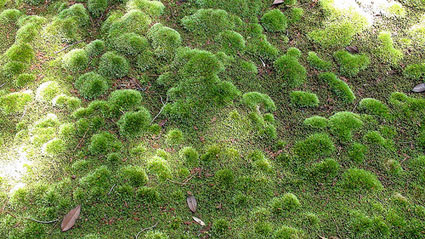
Moss at Kokedera (Saihoji) in western Kyoto.
The moss garden is at its best during the Japanese rainy season in June and July but is beautiful at any time of year

Saihoji Gardens

The garden is split level, with the upper level featuring a kare-sansui traditional dry landscape garden, and the lower level a pond shaped like the kanji for "heart" with a strolling path around it, and designed to give the impression that the pond has a geographical connection with the hills in the background.

This innovative design influenced later generations of garden designers and most famously the garden and temple building were used as models for the building of Ginkakuji Temple.

Ironically, the moss, which is now the temple's biggest draw, is the result of the temple and its gardens having been left to go into disrepair at least a century ago. There are an estimated 120 species of moss at Saihoji covering much of the grounds. Fall is a special time to visit, when the temple's trees color the grounds, but the moss is at its greenest in early summer - May and June.

The famous Kyoto-born artist and epicure, Kitaoji Rosanjin (1883-1959) is buried at Saihoji.

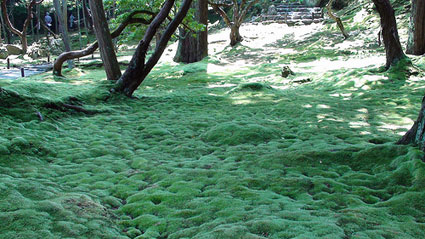
A carpet of moss at Kokedera (Saihoji Temple) in western Kyoto.
The temple is one of the most popular with foreign visitors in Kyoto

Visiting Saihoji - Making A Reservation

A reservation is required to visit Saihoji. Write the temple (see address below) with your name, address in Japan (that of a hotel will do), occupation, age (you must be at least 18), number of people in your group, and the date you wish to visit, plus an alternate date.

Include a self-addressed stamped postcard (ofuku hagaki; 往復はがき) available from the post office or a convenience store, or, if sending from overseas, a postcard with an international reply coupon. The ofuku hagaki is a set of two postcards one of which will be used by Saihoji to reply.

This must be done as early as possible: 2 months or several weeks at least, not days, ahead. Do not show up late for your appointed time.

Note: If you would rather consign the application process, please contact the GoodsFromJapan Concierge Service, which can take of the arrangements for you for a reasonable fee and have the reply from Saihoji posted to your hotel in Japan.

Please contact us to use our service to make an application to visit Saihoji Temple.

*Update: Saihoji now take reservations directly on their website here in English - https://intosaihoji.com/en/booking/nichinichi

The visit fee charged by Saihoji is 4,000 yen per person (up from 3,000 yen), which is the highest in Kyoto. Prior to entering, you will be asked to take part in a period of zazen, the chanting of sutras or calligraphy. This lasts 40 minutes to an hour but allowance is made for people to retire early from this, especially the elderly, infirm or non-Japanese visitors.

A carpet of moss at Kokedera (Saihoji Temple) in western Kyoto.
A carpet of moss at Kokedera (Saihoji Temple) in western Kyoto

Moss Temple Access - how to get to Saihoji

Kyoto Bus #63 from Shijo Kawaramachi and Sanjo Keihan Station is the most straightforward. Get off at Koke-dera/Suzumushi-dera - the final stop. There is only one bus an hour at 27 minutes past the hour. See here for the full timetable: www.kyotobus.jp/route/timetable/pdf/shijokawaramachi_03.pdf

Kyoto Bus #29 starts at Shijo-Karasuma. Get off at Koke-dera-michi bus stop. Go back a little in the direction the bus came from, as far as the footbridge across the main Mozume-kaido Road, and go left there. You will get to Koke-dera in just under 10 minutes.

Kyoto Buses #73 and #28 start at Kyoto Station.

Take bus #73 to the "Kokedera Suzumushidera" stop and walk 3 minutes. There are #73 buses on the hour or just past the hour from 8am to 9pm and at approximately 20 minutes past and 20 minute to the hour. See here for the full timetable. www.kyotobus.jp/route/timetable/pdf/kyotoekimae_02.pdf

On the #28 bus get off at Matsuo-Taisha-mae bus stop. Walk back down the main Mozume-kaido Road in the direction the bus came from, about 12 minutes to the second footbridge, then right down Koke-dera-michi for about 8 minutes.

The nearest train station to Saihoji Temple is JR Saga Arashiyama. From Kyoto Station the journey takes about 12-16 minutes on the JR Sagano Line to Kameoka and Sonobe and costs 240 yen. From JR Saga Arashiyama Station a taxi would cost about 1,000 yen and takes about 10 minutes.

Alternatively from Shijo Station on the Kyoto subway take a Hankyu Arashiyama Line train to Matsuo Taisha Station and walk 20 minutes.

There is also a route from Saihoji by bicycle from Arashiyama.

Saiho-ji
Matsuo Jingatani-cho 56
Nishikyo-ku
Kyoto
615-8286
Tel: 075 391 3631

Book Hotel Accommodation in Kyoto Near Saihoji

Oyama Guesthouse - a budget option close to Saihoji
Hotels in Kyoto - Agoda.com

Monday, May 08, 2023

Ghosts of the Tsunami: Death and Life in Japan's Disaster Zone

Ghosts of the Tsunami: Death and Life in Japan's Disaster Zone

Ghosts of the Tsunami: Death and Life in Japan's Disaster Zone

by Richard Lloyd Parry

Picador (2017)

ISBN: 978-1250192813
Paperback, 276 pp

Ghosts of the Tsunami: Death and Life in Japan's Disaster Zone.
Ghosts of the Tsunami: Death and Life in Japan's Disaster Zone

On March 11, 2011, Japan's Tohoku region (northeast coast) was struck by what has been called a triple disaster: the largest earthquake in the country's history (and fourth largest in the history of seismology), followed by an enormous tsunami, followed by a disastrous nuclear meltdown.

The earthquake was 9.0 on the Richter Scale, knocked the earth off its axis by six and a half inches, and moved the whole of Japan 13 feet closer to America. The tsunami reached heights of 120 feet and erased numerous villages from the face of the earth. The nuclear meltdown joined the Chernobyl disaster as one of the two worst nuclear accidents in history.

When the final numbers of the triple disaster were added up, the costs were set at $US210, billion (the costliest natural disaster ever) in damage, half a million people homeless and 18,500 dead. Of course, many of the survivors still suffer from trauma.

While author Parry does give attention to the earthquake and the nuclear meltdown, he focuses most of his scrutiny on the tsunami – most specifically the drowning of 74 students and 10 teachers of Okawa Elementary School in Ishinomaki City, Miyagi Prefecture, who lost their lives due to some incredibly poor decisions made by that school's officials.

While some sixth-grade boys begged to be let out of school to run up a nearby hill to safety, the teachers said no, then later directed students and staff towards the incoming tsunami.

Parry, who had worked 16 years in Japan at the time of the triple disaster, follows the lives of the local survivors, including their attempts - through the courts and otherwise - at getting to the truth of what happened at Okawa Elementary.

The ghosts from the title of the book refer to supernatural phenomena that were reported after the tsunami. The ghost stories are somewhat interesting, but can probably be better explained by either mental illness due to the enormous stress people there had to endure, or depending on your belief system, demon possession.

In any case, psychists and mediums often gave completely different answers to questions they received such as where the best place to look for bodies would be and whether the deceased children were now happy or miserable.

Although the book is recommended reading, there are a few minor annoyances. One is the author's dependence on/love of his thesaurus. Numerous words like frisson, tannoy, catarrh, rotas, lineaments and other very low-usage words are sprinkled throughout the book. His oeuvre is bumfuzzling.

Another annoyance is the low quality of the half dozen pictures in the book. This is likely the result of using low quality paper. Also, cutlines (captions) on the pictures, something that would have been helpful, are non-existent.

Parry shows great empathy towards the people of Tohoku (which he inexplicably says is pronounced "Tour hock-oo"), but he gives no breaks to the two men deemed by him and others to be the most responsible for the school children's deaths.

Overall, the book is a good read into some of the darkest days in Japanese history.

Review by Marshall Hughes.

Buy this book from Amazon USA | UK | Japan

Looking to buy Japanese things directly from Japan? GoodsFromJapan is here to help.

More Japan Book Reviews

90-Day Geisha

All About Japan - Stories, Songs, Crafts and Games for Kids

Diary Of A Void

Exposure: From President to Whistleblower at Olympus

Japanese Kokeshi Dolls: The Woodcraft and Culture of Japan's Iconic Wooden Dolls

Japanese Dolls: The Fascinating World of Ningyo

Off the Beaten Tracks in Japan

Reflections on Tsuda Umeko: Pioneer of Women's Education in Japan

The Snow Woman and Other Yokai Stories from Japan

Tokyo Outdoors: 45 Walks Hikes & Cycling Routes

Saturday, April 22, 2023

Introduction to Japanese Masks

An Introduction to Japanese Masks お面

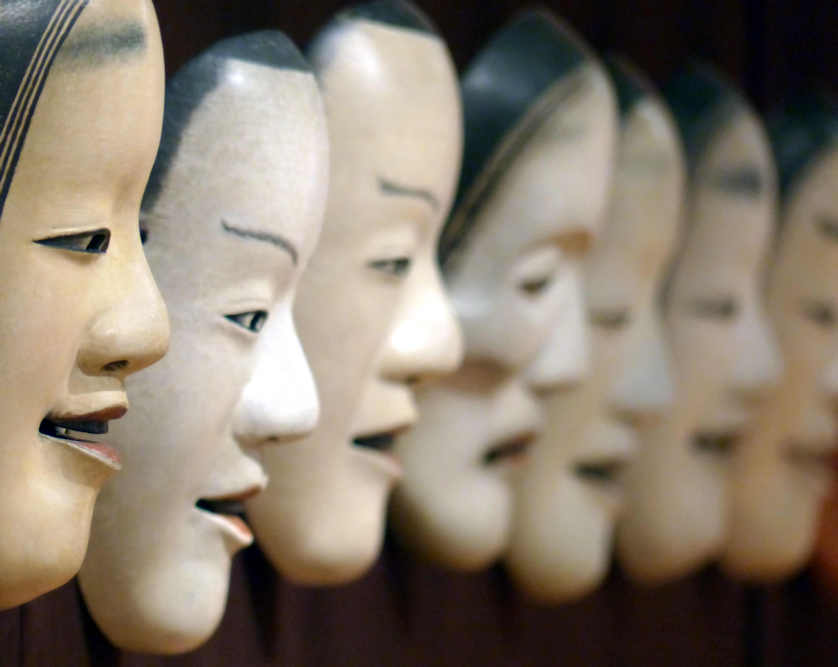
A selection of onna masks representing young women in Noh Dramas.
A selection of onna masks representing young women in Noh Dramas

Like many ancient cultures all around the planet, Japan has used and produced various types of masks that were probably originally used in rituals and magic and that later developed into storytelling and theatre. Outside of the various types of masked theatre, numerous participants in festivals wear masks.

There are many recognizable types of masks that are found all over the country and can be said to represent a purely Japanese style, but many regions and localities have unique forms not found elsewhere in the country.

In Japan, masks are considered to possess power and so are used not just as decoration but also to protect shrines, temples, and increasingly homes.

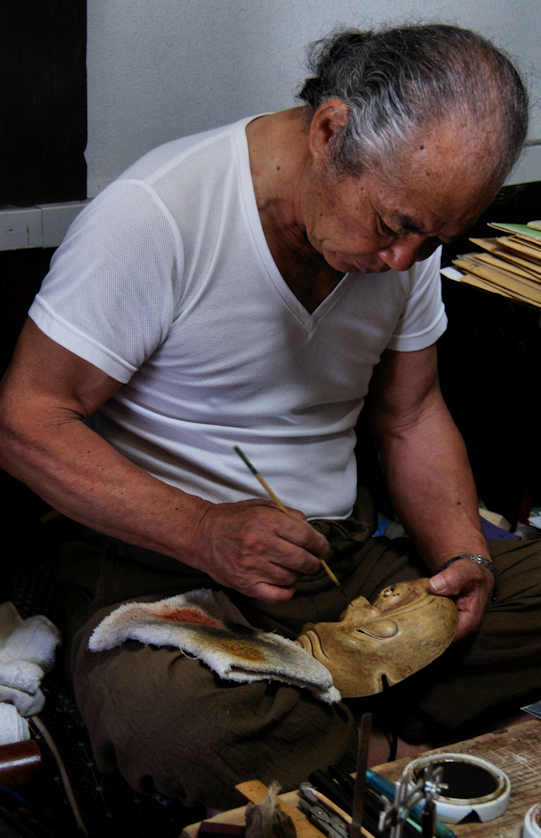
A Noh-mask carver in Hofu, Yamaguchi, applying pigment to a mask.
A Noh-mask carver in Hofu, Yamaguchi, applying pigment to a mask

Noh Theatre

Japanese mask-making reached its peak with the masks created for Noh dramas. Noh is a style of musical theatre from the 14th century and is still performed today. Masks are integral to Noh, with hundreds of different ones produced for characters both human and supernatural, but an interesting feature of noh masks is that to a large extent they are made to be expressionless. The art is in making masks that display different emotional states just by changing the angle of the mask. Noh masks are carved from a single block of wood, usually cypress, and painted using minimal, natural pigments.

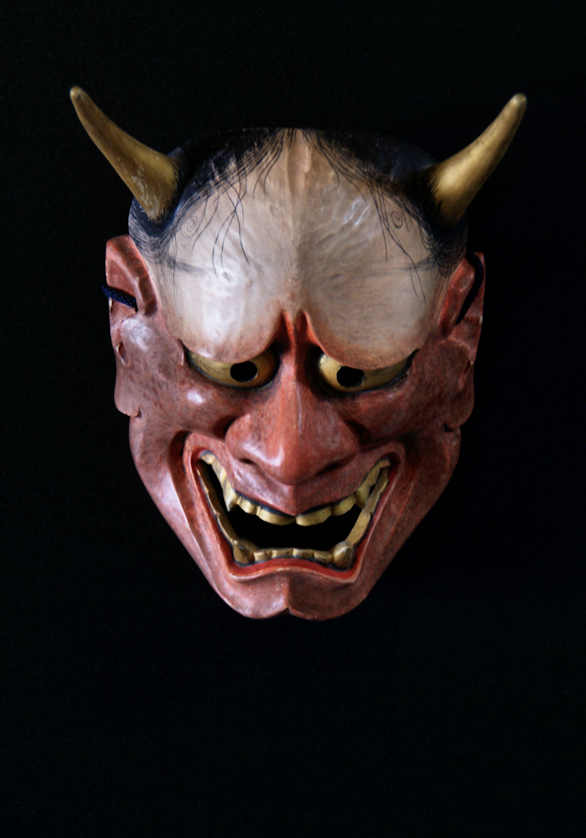
The most iconic of Japanese masks, the female demon known as Hanya.
The most iconic of Japanese masks, the female demon known as Hanya

Hannya

Perhaps the most well-known Noh mask is the Hanya, or Hannya, a type of female demon. With sharp horns and teeth, and a somewhat leering mouth, Hanya masks express a range of emotions from demonic and angry to tormented and melancholic as the Hanya represents what happens to women when they are betrayed and become angry and jealous. The hanya mask is so iconic it is seen in many other forms of art and is a very popular design element in tattoos.

A selection of wooden masks made not to be worn but displayed.
A selection of wooden masks made not to be worn but displayed

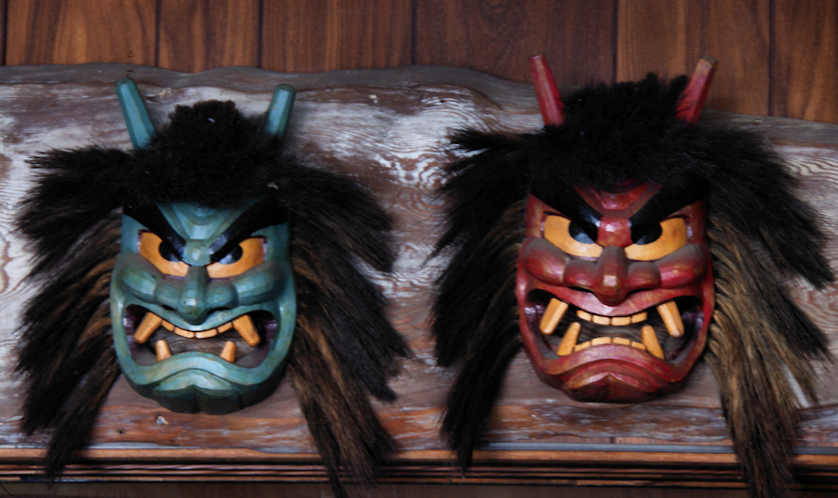
Oni Demon

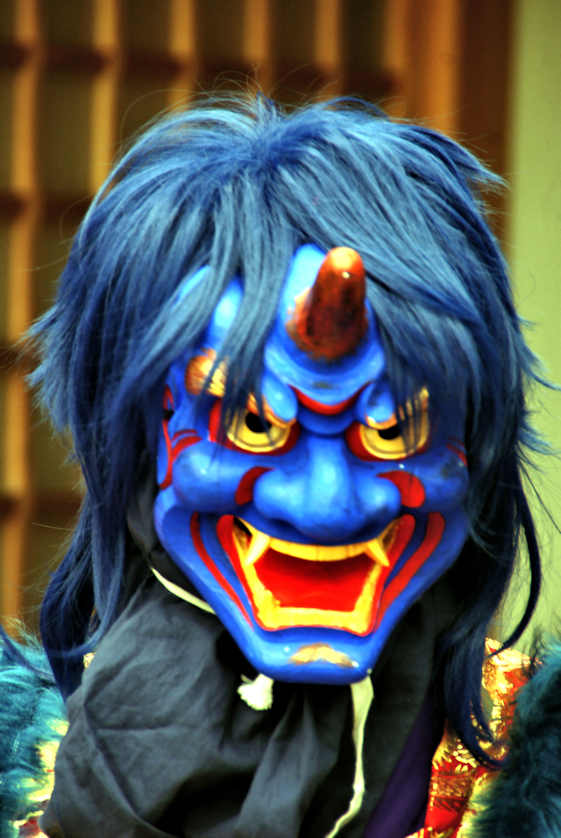
The Oni mask is probably the type of mask with the widest variations across the different regions of the country. Oni is most often translated as "demon", but in fact "ogre" would probably be a better translation as in the West demons are considered pure evil, but oni, while generally doing bad, can in some cases be capable of doing good. Oni come in a variety of colors and are usually quite hairy and horned and in many stories are obviously linked with outsiders and the wild and dangerous mountains.

Namahage demon masks from the Tohoku area of northern Japan.
Namahage demon masks from the Tohoku area of northern Japan

Tengu

Often referred to as "forest goblins", red-faced and long-nosed Tengu are also a very common mask found throughout Japan. Earlier versions of the Tengu called Karasu Tengu, "Crow Tengu", had beaks but most nowadays have the very phallic long nose and wear a small black cap called a tokin which are worn by the mountain-dwelling ascetics called Yamabushi who spend time in the mountains gaining magical powers. Tengu and yamabushi are inextricably linked and tengu masks are very common at shrines and temples and sacred mountains connected to Yamabushi all over Japan.

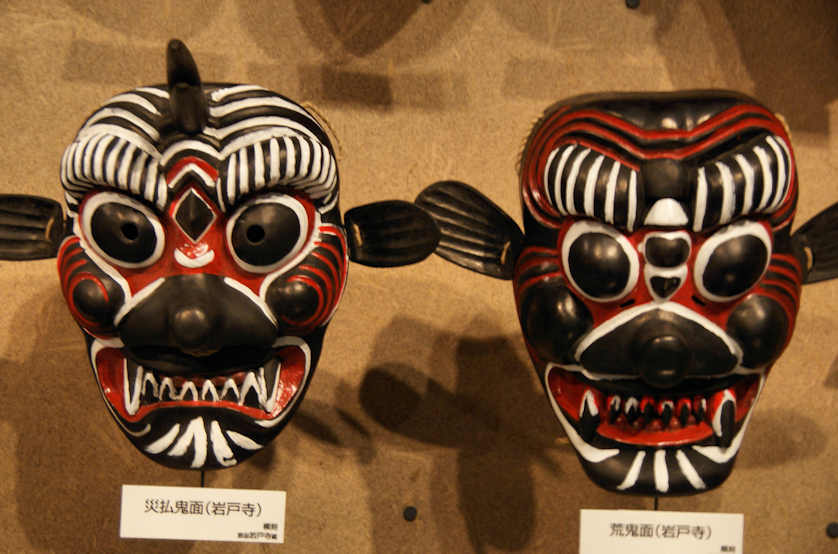
Masks from the Kunisaki Peninsula in Kyushu are very striking and would not look out of place in Africa.
Masks from the Kunisaki Peninsula in Kyushu are very striking and would not look out of place in Africa

Sarutahiko

The development of the long-nosed Tengu from the Crow Tengu is probably linked to a character from ancient mythology called Sarutahiko. He is said to have led the imperial ancestors to Japan from the High Plain of Heaven.

Consequently a character wearing a Sarutahiko mask will usually lead a festival procession, though nowadays it may just as likely be a tengu mask. Sarutahiko married a goddess called Uzume and they are said to be the ancestors of the clan who served as theatrical performers.

She is often represented with a rather chubby, round-faced mask, and a male-female pair of Sarutahiko and Uzume masks are commonly found together. They are also used in a few of the remaining phallic festivals that remain in Japan.

In many agricultural-based festivals and folk dances male dancers wear rather comical, simple-minded, peasant masks. Often playing the fool, he is often represented with his mouth stuck in a twisted and protruded position that comes from a character called Hyottoko whose face is stuck in that expression by blowing through a bamboo pipe to keep the coals of a forge fire going.

Masks of various kinds, especially demons, are put up in buildings to protect against various forms of misfortune, but some masks, specifically those of  Daikoku and Ebisu who are two of the Seven Lucky Gods, are put up especially by businesses, to attract good fortune and success.

Purchase a Range of Traditional Masks from Japan

Purchase a selection of traditional masks from GoodsFromJapan

Jake Davies

Gallery

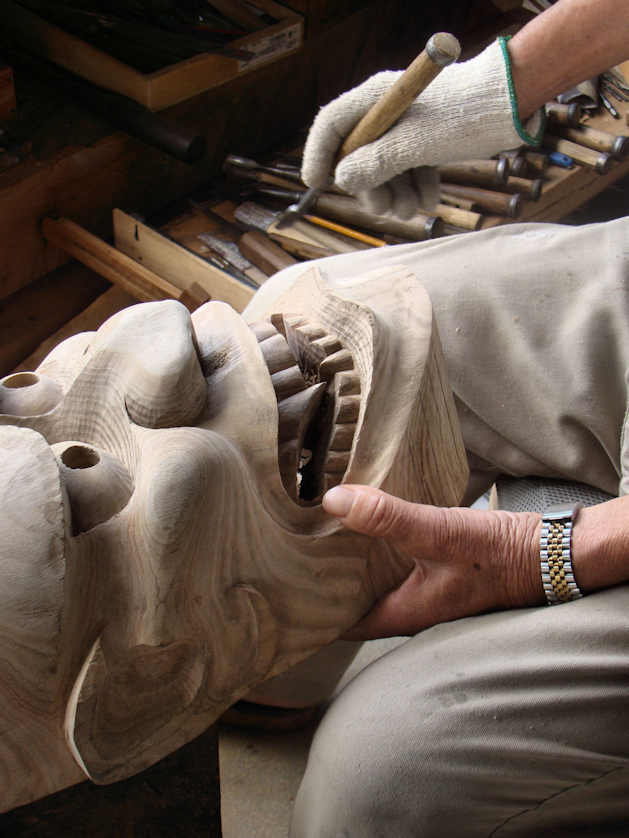
A mask-maker in Oita working on a Hanya mask.
A mask-maker in Oita working on a Hanya mask
Standing guard during Setsubun at a Kyoto temple, an unusual single-horned oni mask.
Standing guard during Setsubun at a Kyoto temple, an unusual single-horned oni mask
A variety of different Tengu masks including a Karasu Tengu, top centre.
A variety of different Tengu masks including a Karasu Tengu, top centre
Giant Tengu mask at Kurama, a famous yamabushi site near Kyoto.
Giant Tengu mask at Kurama, a famous yamabushi site near Kyoto
Sarutahiko, wearing a tengu mask, leads a mikoshi parade.
Sarutahiko, wearing a tengu mask, leads a mikoshi parade
Hyottoko mask worn during a rice planting festival.
Hyottoko mask worn during a rice planting festival

Related

Aizuwakamatsu Hand Painted Candles

Cedar Leaf Incense

Daruma Dolls - History & Symbolism

Ema Votive Plaques

Family Mart Conveniece Wear

Ishigaki Sea Salt

Koinobori Carp Streamers

Sayama Japanese Green Tea

Shichimi Togarashi Seven Spices

Yatsuhiro & Tatami

Yuzukosho Spice of Kyushu

Tuesday, April 11, 2023

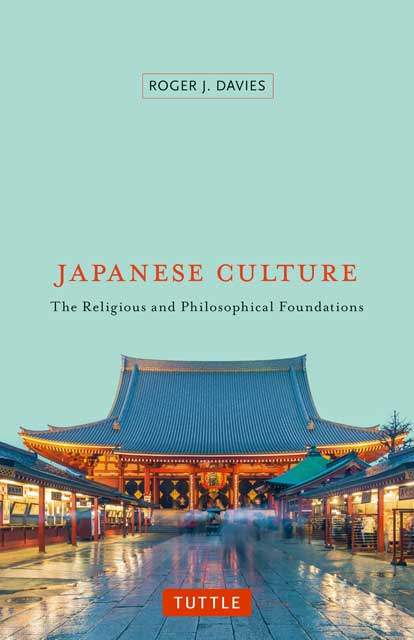
Japanese Culture Religious and Philosophical Foundations

Japanese Culture: The Religious and Philosophical Foundations

Japanese Culture: The Religious and Philosophical Foundations

by Roger J. Davies

Tuttle (2016)

ISBN: 978-4805311639
Paperback, 160 pp

Japanese Culture Religious and Philosophical Foundations.

What have been the most powerful influences shaping Japan over its long history? Exactly what has each of these influences contributed to make Japan what it is today?

Professor Roger J. Davis has put together this interesting book from his college lectures designed for international business students studying in an MBA program at Hitotsubashi University in Tokyo.

At 160 pages (125 without the appendixes), it is not an exhausting tome, but it is enough to inform and entertain any reader wanting some of the basics.

The first two chapters are spent not on expounding on the most significant influences, but on the basics of where the Japanese people came from and what models social scientists usually use in dissecting civilizations.

From there, there are six more chapters, with each chapter dealing with one of what Davies says are the main influences which helped shape Japanese society. Arranged chronologically, they are: Shinto, Buddhism, Taoism, Zen, Confucianism and Western Influences in the Modern Era.

Each chapter ends with extra notes on that chapter's main topic, followed by discussion questions. Some of the discussion questions can be answered quickly, even by novices. An example from the Western Influences chapter would be; "It is often claimed that contemporary Japanese society is highly secular and materialistic. Do you agree or disagree?" Anybody who has lived in Japan for any period of time can offer a reasonable opinion on this.

Other discussion questions require a deeper knowledge to even attempt an answer. An example of this from the Zen chapter would be; "Although Zen is not the largest sect in Japan, it is the most popular and widely recognized in the West. Why is it not as popular as other Buddhist sects in Japan?"

For all of its modern technological wonders, Japan got off to a late start according to Edwin Reischaeur, former US Ambassador to Japan, who is frequently quoted throughout the book, and who has several entries in the helpful six-page bibliography.

Reischaeur is quoted as saying, "The (Japanese) islands were thousands of years behind Europe, the Middle East, the Indian subcontinent and China in the introduction of agriculture and centuries behind in the use of bronze and iron."

One of the more interesting sections delineates how the Japanese government started and propagated state Shinto - with special focus on education and thought police - to move the Japanese citizens towards accepting war.  Shinto and state Shinto were very different things.
Reischaeur makes the case that state Shinto was "a ruthless attack on Buddhism." It sure was an attack on something.

Overall, the book would be interesting for almost any reader, but if you are already an expert on the religious and philosophical foundations of Japan, you might find the depth a little lacking.

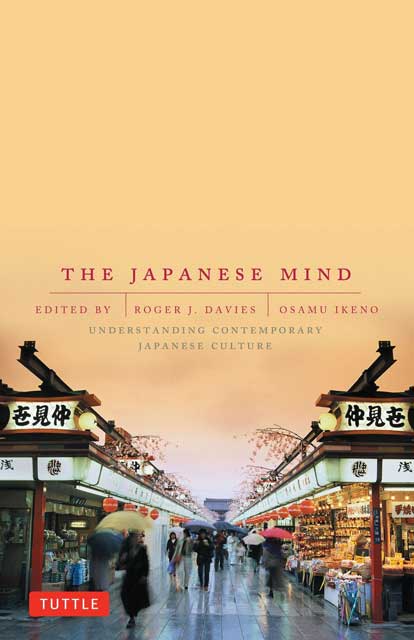
Note: This book is a follow up to Davies' well-acclaimed "The Japanese Mind: Understanding Contemporary Japanese Culture," which was published in 2002.

Review by Marshall Hughes.

The Japanese Mind: Understanding Contemporary Japanese Culture.

Buy this book from Amazon USA | UK | Japan

Looking to buy Japanese things directly from Japan? GoodsFromJapan is here to help.

More Japan Book Reviews

90-Day Geisha

All About Japan - Stories, Songs, Crafts and Games for Kids

Black Ships Illustrated Japanese History

Christianity Social Justice And The Japanese American Incarceration During World War II

Exposure: From President to Whistleblower at Olympus

Ghosts of the Tsunami

Japanese Kokeshi Dolls: The Woodcraft and Culture of Japan's Iconic Wooden Dolls

Japanese Dolls: The Fascinating World of Ningyo

Reflections on Tsuda Umeko: Pioneer of Women's Education in Japan

Tokyo Outdoors: 45 Walks Hikes & Cycling Routes

Satsuma Rebellion - Illustrated Japanese History

© GoodsFromJapan.com
Tuesday, April 04, 2023

Exposure: From President to Whistleblower at Olympus

Exposure: From President to Whistleblower at Olympus

Exposure

by Michael Woodford

Penguin (2013)

ISBN: 978-0241-9636-16
Paperback, 272 pp

Exposure: From President to Whistleblower at Olympus.
Exposure: From President to Whistleblower at Olympus

One of the biggest financial scandals in Japanese history was the 2011 scandal surrounding Olympus Corporation. The scandal is said to have involved $US1.7 billion, or more.

In April, 2011, British national Michael Woodford, who had worked at Olympus for 30 years, became chief operating officer, and in October of that year he took the reigns as chief executive officer. Almost immediately after becoming CEO, Woodford sniffed out giant financial shenanigans in Olympus and started asked questions.

Two weeks after taking over he was fired for, it turned out, having uncovered the malfeasance, but he remained on the board of directors as those positions are determined by shareholders.

Fearing for his life, and suspecting that Japan's yakuza might be involved in the fraud - a suspicion that turned out to be erroneous - Woodford fled Japan and headed home to England.

He immediately contacted the Serious Fraud Office and New Scotland Yard, and was interviewed by a number of major media. He had covered his bases well by sending emails with his questions and suspicions to numerous people. The word was out, and he was safely, hopefully safely, in England.

In 2012, Woodford wrote this book about the whole sordid affair.
One thing that many readers must overlook is the seemingly unquenchable ego that Woodford displays throughout the book. He is to be commended for working his way up from a lowly start in life, but he is eager to let everyone know how posh his lifestyle was.
There are numerous examples of this, from his expensive champagne to his hotel room with the 1,000-book library and baby grand piano. Admittedly he was upgraded to that by his hotel for being a frequent customer, but you get the idea.

The book was written in late 2012, and occasionally references are a bit anachronistic. For example, of the four foreigners who had headed major Japanese companies he writes, "with only Carlos Ghosn of Nissan remaining, Japan seemed to be shutting the doors (on foreign leaders of Japanese companies)." The door on Ghosn would later shut as he escaped the country in 2019 while hiding in a musical instrument box while out on bail for alleged crimes during a later corporate scandal involving a foreign CEO.

One thing that inquiring minds will want to know is what happened to the bad guys involved. How many of them got locked up in jail and for how long? The book doesn't answer these questions, but the info can be found on line. Hint: Not many and not long enough.

The civil lawsuits were more fruitful. In May of 2019, well after the book was published, the Tokyo District court handed out a fine of 59.4 billion yen (then US $594 million) to the three main miscreants, former president Tsuyoshi Kikukawa, former executive vice president Hisashi Mori and former statutory auditor Hideo Yamada.
Additionally, Woodford was later awarded £10 million for personal damages.

The exact fraud, basically a tobashi scheme, is not fully explained until about ¾ of the way through the book. The explanation may be a little bit hard to follow for some laymen, but readers don't need to fully understand how it worked to understand the gravity of the situation.
After all, $US1,700,000,000 ($1.7 billion) is a lot of fraud.
Woodford's work is easy to read and the pages fly by. Readers don't have to like Woodford personally (though some certainly will) to enjoy the book and learn about an interesting chapter of recent Japanese history.

Exposure Review.

Review by Marshall Hughes.

Buy this book from Amazon USA | UK | Japan

Looking to buy Japanese things directly from Japan? GoodsFromJapan is here to help.

More Japan Book Reviews

All About Japan - Stories, Songs, Crafts and Games for Kids

Convenience Store Woman

Ghosts of the Tsunami

Japanese Kokeshi Dolls: The Woodcraft and Culture of Japan's Iconic Wooden Dolls

Japanese Dolls: The Fascinating World of Ningyo

Reflections on Tsuda Umeko: Pioneer of Women's Education in Japan

Tuesday, March 07, 2023

Japanese Paper Lanterns For Films & Theatrical Performances

Japanese Paper Lanterns ちょうちん(提灯)

Our Japanese paper lanterns are hand-made and of the highest quality. They have been used on film sets and theatrical productions both overseas and in Japan.

Japanese lantern.

The customer can choose the design or leave that to GoodsFromJapan to suggest both classic and contemporary motifs such as pictured here.

Custom lantern.

Various sizes and qualities are available to suit all budgets.

Japanese chochin lanterns.

These beautiful lanterns also make beautiful gifts for the home.

Lanterns from Japan.

Japanese Chochin Lanterns

Yanai Goldfish Lanterns

How to Order a Custom Lantern From Japan

© GoodsFromJapan.com
Tuesday, February 14, 2023

Yuzukosho Spice of Kyushu

Yuzukosho (柚子胡椒) - The Spice of Kyushu

by Johannes Schonherr

Yuzukosho (柚子胡椒) - The Spice of Kyushu.
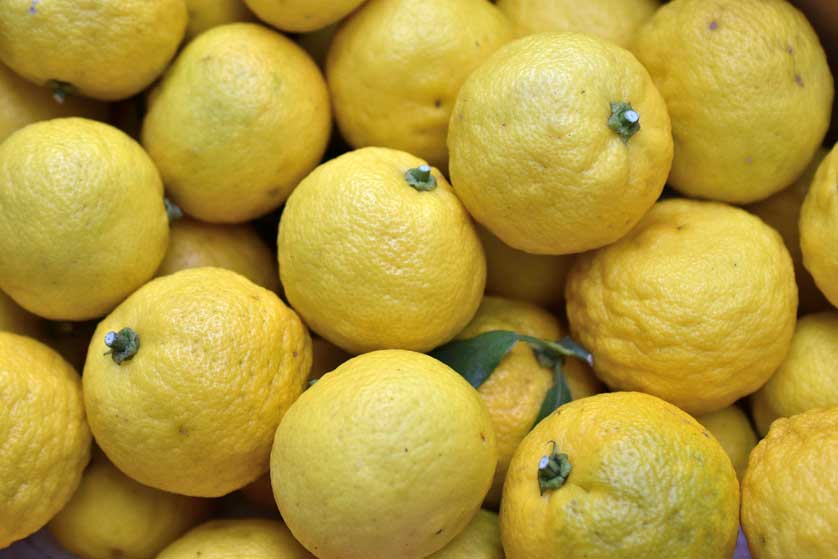
Yuzu fruits

Yuzu are a citrus fruit famous for their strong fragrance, grown mainly on the southwestern Japanese islands of Kyushu and Shikoku.

Yuzukosho (yuzu pepper) is a paste made of yuzu peel, green chili pepper, salt and a bit of yuzu juice which has been traditionally used in nabemono hot pot soups, typically eaten in winter.

Nowadays, the variety of use for yuzukosho as an ingredient has spread far and wide: from various Japanese soup dishes like udon and soba to yakiniku barbecue to steak seasoning. Some adventurous restaurants serve their sushi and sashimi with yuzukosho rather than wasabi.

Western chefs have also picked up on yuzukosho as an exotic yet multi-purpose spice, enlivening their creations with an earthy yet highly refined note.

Yuzu (柚子) are a winter fruit in Japan

Yuzu Fruits

Buy a premium quality yuzu at a farm in Kyushu or at a department store elsewhere in Japan and take it out of its protective plastic cover.

The fragrance of the fruit quickly fills the room.

That's why it is an old Japanese custom to let a few yuzu swim in the onsen hot spring bath water on a winter solstice night: yuzu being a winter fruit, it brings out the best of the smells of the season.

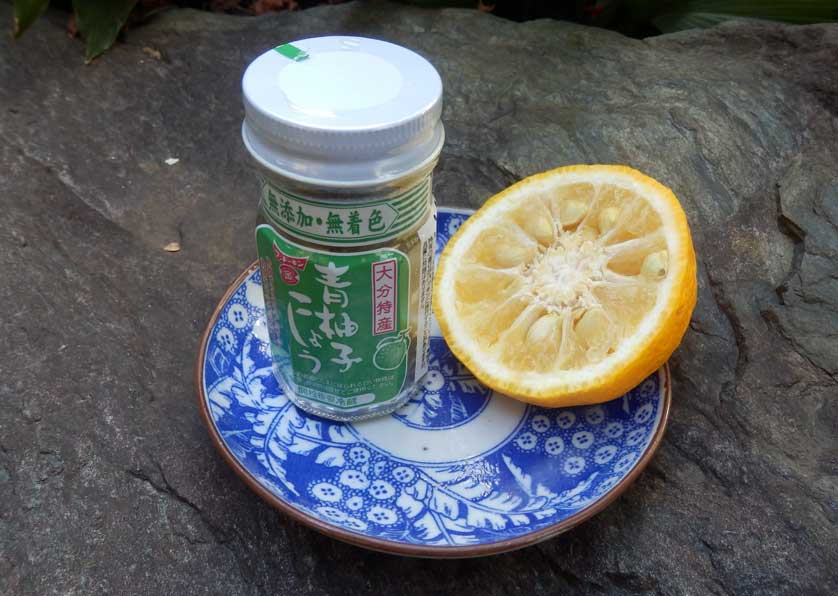
Cut open the fruit and you will be bit disappointed: plenty of seeds embedded in rather loose flesh. Very little juice can be extracted from a single fruit.

It is the outer yuzu peel that is precious. That's the part of the fruit responsible for the fragrance. Cut the outer, yellow peel off a ripe fruit and you will find it to be a delicious ingredient in soups, salads, pasta or meat dishes.

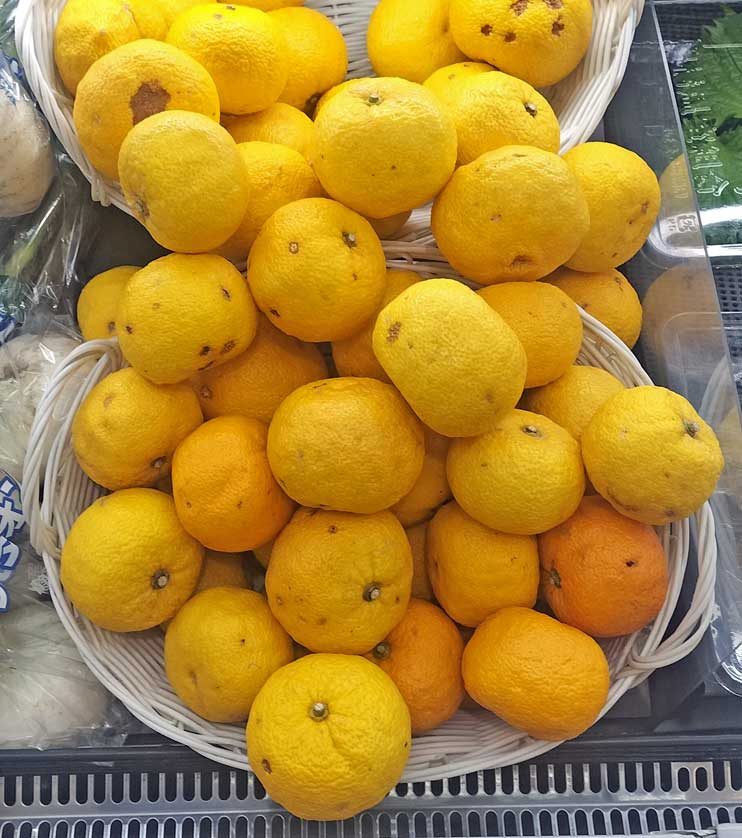
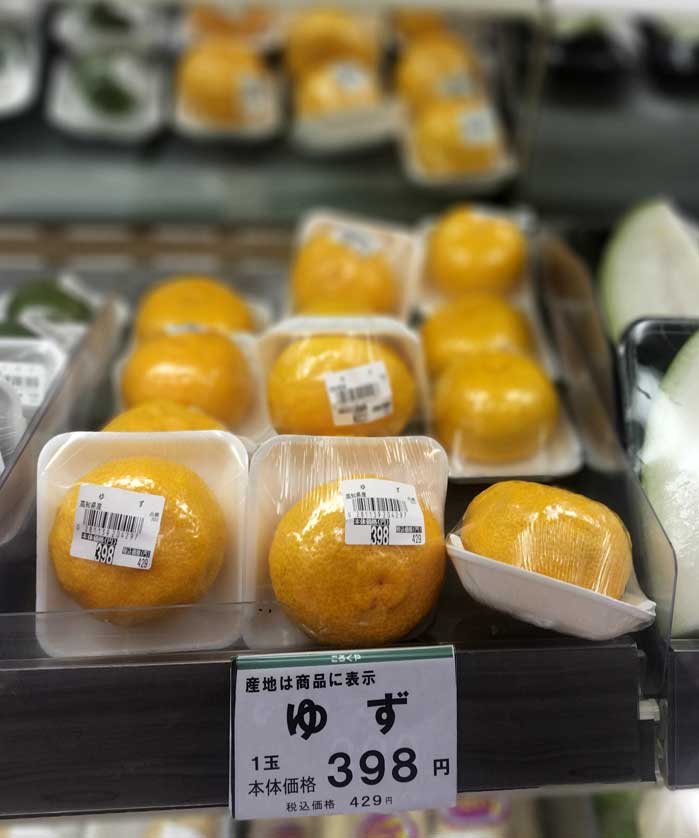
Yuzu on sale at a Japanese supermarket.
Yuzu on sale at a Japanese supermarket

Fresh yuzu fruits can be a bit hard to come by outside of Japan, however.

A limited amount of yuzu is grown in California, for example, but as food writer Helen Rosner stated in an article for The New Yorker in February 2020 aptly titled Nothing Compares to Yuzu, "the U.S.D.A. [United States Department of Agriculture] has a ban on the import of fresh yuzu from abroad - the fruit and the trees." After lamenting the high prices for yuzu on the U.S. East Coast, she continues saying, "I'm told that, among New York chefs, there is a thriving black market in fresh yuzu smuggled from Japan."

Yuzukosho however can freely be shipped from Japan to the U.S. and anywhere else. Goods from Japan is an easy and reliable source.

Yuzu fruit and Yuzukosho.
Yuzu fruit and Yuzukosho

Yuzukosho

So, what exactly is yuzukosho? Yuzukosho is a fermented paste made up of the peel of unripe green yuzu, green chili pepper, salt and a bit of yuzu juice.

It contains all the fragrance of the yuzu, it is spicy, can be used for a wide variety of purposes (you might want to experiment with it a bit) and it remains in good, fresh condition for a very long time.

The origin of yuzukosho is central-northern Kyushu. Around the city of Hita in Oita Prefecture, about halfway between the Pacific coast and Fukuoka, farmers have made yuzukosho for centuries. Mainly for their own private use though some of the specialty certainly found its way to the markets of bustling Hita, known in the Edo Period as the Kyoto of Kyushu.

Yuzukosho remained a decidedly local spice of northern Kyushu well into the 1990s, sold at souvenir shops in Yufuin and other hot spring resorts as a sort of unique local gift to take home to friends.

Fundokin Green Yuzukosho

Things changed in the late 1990s when Fundokin, a major maker of miso paste and shoyu (soy sauce), based in the old coastal samurai town of Usuki, just south of Oita City, began to sell and promote yuzukosho on a national level.

Suddenly, yuzukosho became available in stores all over Japan. Chefs in Tokyo and elsewhere took notice and incorporated the spice into their dishes. Snack makers came up with yuzukosho rice crackers, yuzu fruit cakes - if you look out for anything yuzu in any Japanese supermarket, you will find a wide variety of yuzu and yuzukosho products.

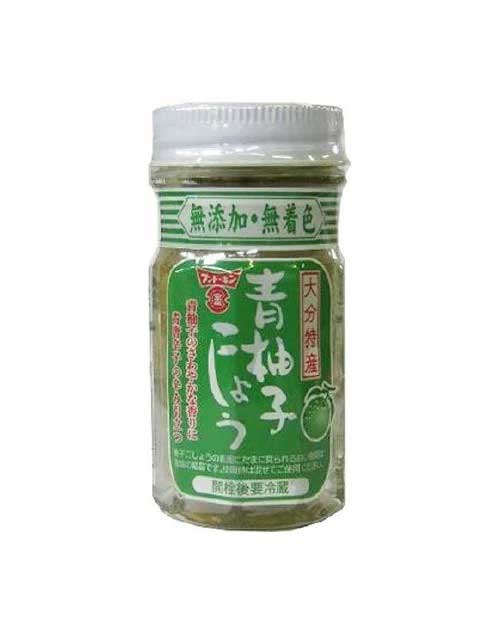
The original Fundokin Green Yuzukosho, produced in Usuki, Oita.
The original Fundokin Green Yuzukosho, produced in Usuki, Oita

Purchase

The original Fundokin Green Yuzukosho, produced in Usuki, Oita without using any additives is conveniently available in the food section at Goods from Japan.

Related

Ema Votive Plaques

Calpis

Cedar Leaf Incense

Cheese Tara

Furikake Tsukudani Rice Topping Kinshobai

Growing Your Own Food in Greater Tokyo

Hoshigaki

Ishigaki Sea Salt

Japanese Chocolates

Japanese Mortar & Pestle Suribachi & Surikogi

Jinbei & Samue

Kabosu Juice

Katsuobushi

Kombu Japanese Kelp

Sancho

Sayama Japanese Green Tea

Shichimi Togarashi Seven Spices

Yatsuhiro & Tatami

© GoodsFromJapan

Thursday, January 12, 2023

Hoshigaki Japanese Dried Persimmons

Hoshigaki Japanese Dried Persimmons - A Traditional Japanese Winter Treat 干し柿

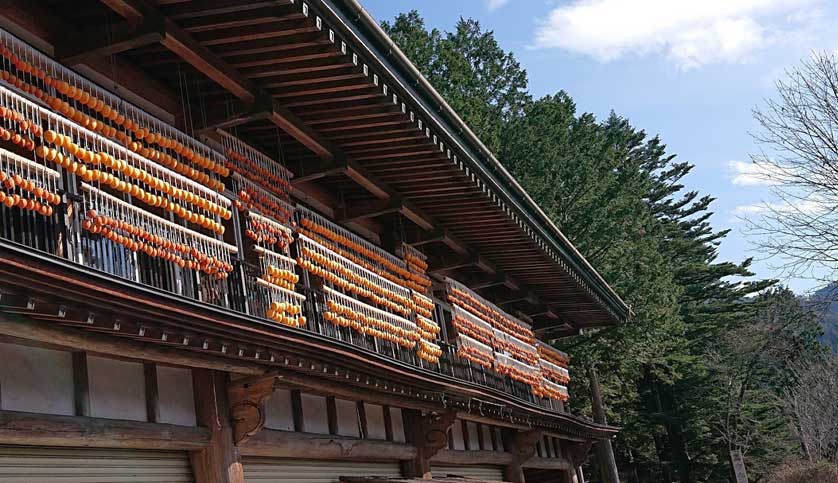
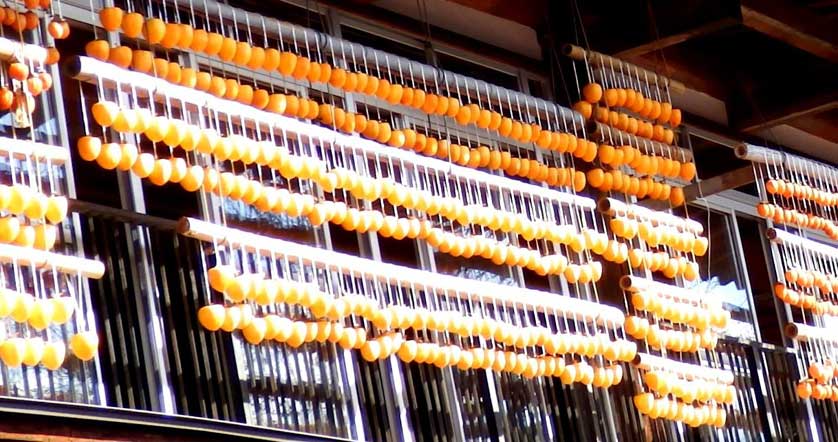
Hoshigaki hung up to dry in Japan.
Hoshigaki hung up to dry in Japan

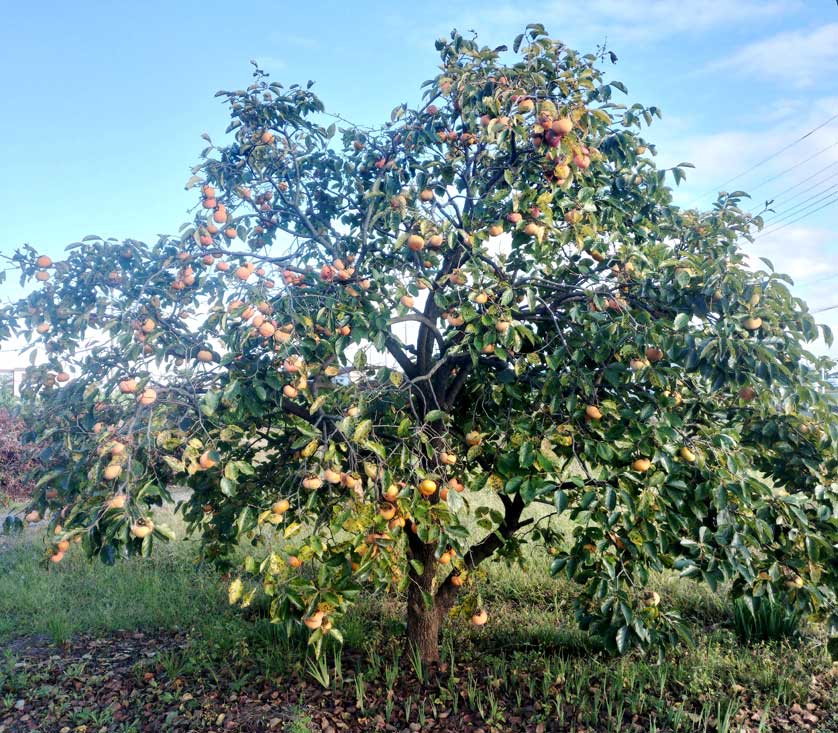
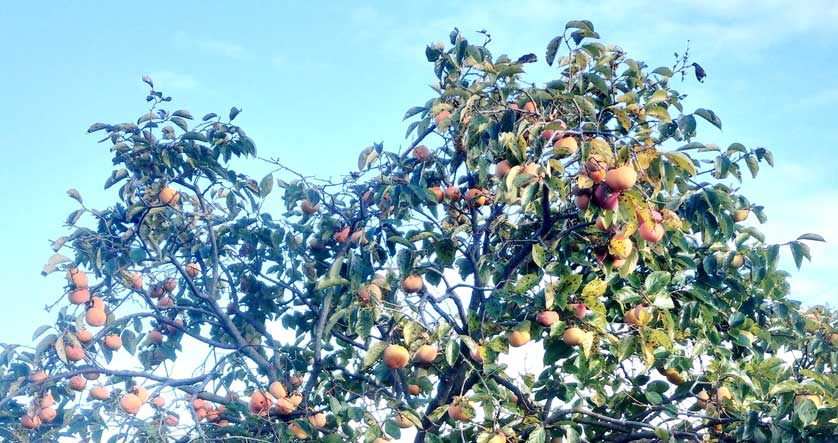
Taking an autumn stroll pretty much anywhere in Japan, you will see trees bulging with kaki (persimmon fruits). Kaki are one of the most popular autumn fruits in Japan. Countryside farmers grow them but they can also be frequently found in suburban gardens.

Most of those kaki are of the amagaki variety, the sweet sort. After peeling, you can eat these fruits right away. They are delicious as fresh fruits.

From early December on, hoshigaki, dried persimmons, are also on sale. Akin to dried figs in Western countries, they are a popular winter sweet. In Japan, they are often served with a hot cup of green tea.

Kaki tree in autumn.
Kaki tree in autumn

The Making of Hoshigaki

It may sound surprising but those sweet hoshigaki are made from quite bitter fruits. Besides those sweet amagaki type kaki ready to eat as a fresh fruit, there is another variety of kaki called shibugaki. It's those shibugaki from which hoshigaki are produced.

Shibugaki translates as 'astringent persimmon': persimmon with a bitter, pungent taste that seems to contract your mouth. Biting into such a fruit is quite unpleasant. (In fact, biting into an unripe sweet kaki has the same effect.)

Shibugaki trees are particularly common in cold, mountainous areas throughout Japan.

In the old days, when besides fresh fruit hardly any sweets were available in Japanese mountain areas, people had to find a way to get their sugar fix for the long winter months. Thus, they found a way to turn those bitter shibugaki into a delicious, nourishing sweet.

Hoshigaki are made today the same way as centuries ago. Shibugaki fruits are collected, then peeled by hand with the help of a knife. Right after peeling the fruits' stems are connected to a rope, often many fruits along one rope.

The ropes are then hung outside in a rain-protected place exposing the peeled fruits to direct sunlight and wind. Usually the protruding roofs of the farm houses serve to provide rain protection. Rain protection is important: if the peeled fruits get wet, they would start to rot.

Being in the usually bright and steady sunlight of the Japanese autumn, along with the usually gently breezes of the season turns the fruits from bitter to sweet. Every few days, they need to be massaged by hand to keep their texture even.

The fruits hang out to dry for about six weeks to two months. Then, they are taken down and placed onto straw mats and kept outside for another 10 days or so.

At the end of the process, the fruits have shrunk to about one fourth of their original weight, they have become considerably smaller. A sticky, greyish white substance covers them. That substance is fruit sugar.

The hoshigaki are now ready for consumption.

Kaki fruits on a tree
Persimmon (kaki)

Purchasing Hoshigaki

Hoshigaki are a seasonal product. They are available in stores and markets only from early December to about late February or early March.

There a various kinds of hoshigaki on sale. The two main varieties are koro kaki which are solid, easy to cut and not too sweet and ampo kaki which are very soft and very sweet.

There are also considerable differences in the package sizes. Very common in supermarkets are packages of about 9 fruits. You can however also purchase large packs of the dry fruits tightly packed together. Those latter ones are usually all connected by one long, thin rope – the rope they were originally dried on.

Uses of Hoshigaki

Hoshigaki can be eaten as a snack just the way they are - as sweet dry fruits. The koro kaki variety is also often used in salads, cut up into smaller pieces and eaten as a snack with cheese and wine or used in cakes, cookies or other bakery products. There are also used in a wide variety of traditional Japanese confectionary.

Hoshigaki drying.
Hoshigaki drying

Ichida Kaki 市田柿

Ichida kaki (aka Ichidagaki) is the brand name for a type of koro hoshigaki from the former Shinano Province in today's southern Nagano Prefecture.

They are grown and prepared in the region around the small town of Takamori, located in the valley of the Tenryu River, right between the Kiso Mountains (aka the Central Japanese Alps) and the Akaishi Mountains (aka the Southern Japanese Alps).

There, the climate consists of hot and humid summers, cold winters and a long, dry autumn. Ideal for the production of hoshigaki. In fact, the town of Takamori calls itself proudly the 'home of hoshigaki'.

Ichida kaki are today the perhaps most popular hoshigaki brand in Japan. They are all grown and prepared on small local farms in the area, each pack carries the name and address of the farm its product originates from.

Ichida kaki typically have a sugar content of about 65% to 70%, one dried fruit weights about 20 gram.

Just as they work perfectly well as a Japanese winter snack, Ichida kaki make also for a fitting and delicious Christmas snack in Western environs.

Ichida kaki.
Ichida kaki

Buy Hoshigaki

You can purchase Ichida kaki conveniently from Goods from Japan. The product is usually only available in winter.

Purchase a range of Japanese foodstuffs and drinks from GoodsFromJapan.

Japan SIM Cards From Mobal

Get a Japan SIM Card from Mobal

Japan Related

Calpis

Cheese Tara

Ema Votive Plaques

Furikake Tsukudani Rice Topping Kinshobai

Happi Coats

Ishigaki Sea Salt

Ishioka Cedar Leaf Incense

Japanese Chocolates

Kaki no Tane

Katsuobushi

Kombu Japanese Kelp

Masu Wooden Sake Boxes

Ramune

Sancho Japanese Pepper

Sayama Green Tea

Shichimi Togarashi

Yanai Goldfish Lanterns

Yatsuhiro & Tatami

Yuzu Kosho Spice from Kyushu

by Johannes Schonherr

Small pack of Ichida kaki, containing 9 fruits.
A small pack of Ichida kaki, containing nine fruits

© GoodsFromJapan.com