An Introduction to Japanese Masks お面
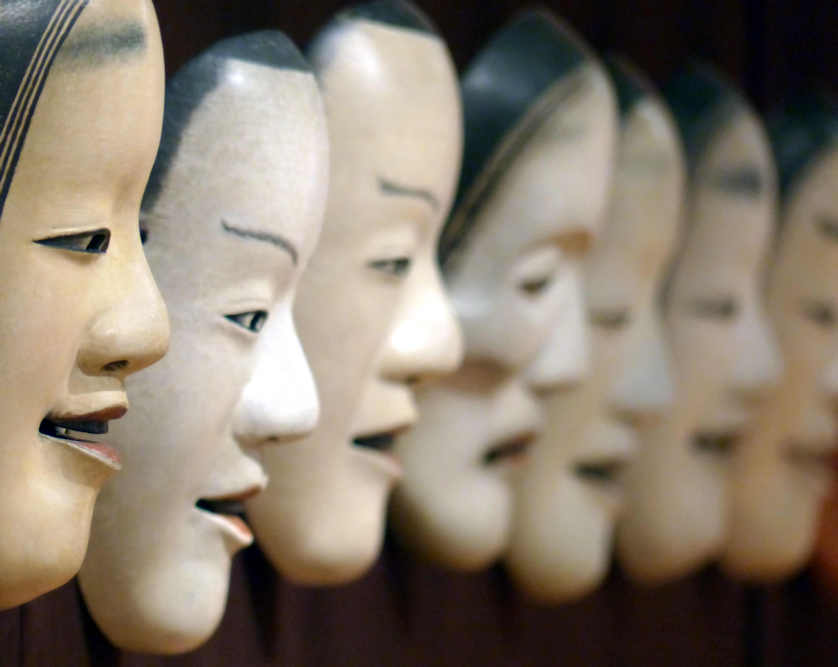 |
| A selection of onna masks representing young women in Noh Dramas |
Like many ancient cultures all around the planet, Japan has used and produced various types of masks that were probably originally used in rituals and magic and that later developed into storytelling and theatre. Outside of the various types of masked theatre, numerous participants in festivals wear masks.
There are many recognizable types of masks that are found all over the country and can be said to represent a purely Japanese style, but many regions and localities have unique forms not found elsewhere in the country.
In Japan, masks are considered to possess power and so are used not just as decoration but also to protect shrines, temples, and increasingly homes.
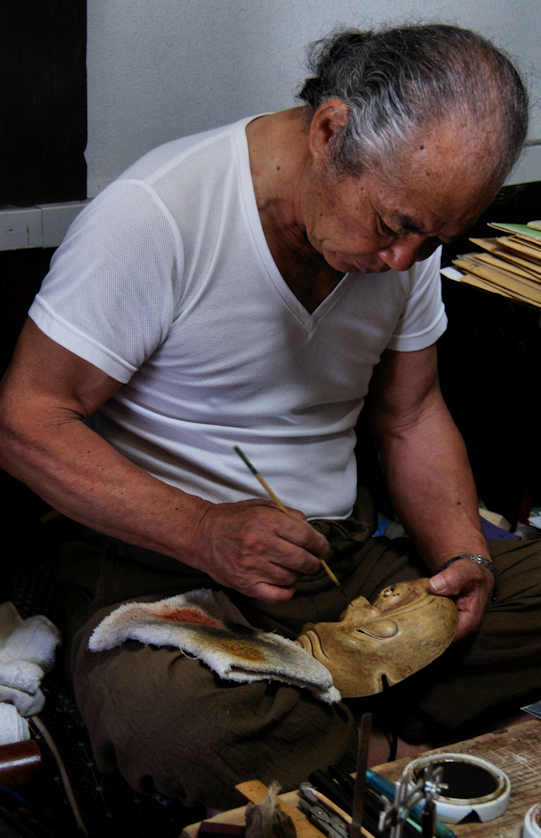 |
| A Noh-mask carver in Hofu, Yamaguchi, applying pigment to a mask |
Noh Theatre
Japanese mask-making reached its peak with the masks created for Noh dramas. Noh is a style of musical theatre from the 14th century and is still performed today. Masks are integral to Noh, with hundreds of different ones produced for characters both human and supernatural, but an interesting feature of noh masks is that to a large extent they are made to be expressionless. The art is in making masks that display different emotional states just by changing the angle of the mask. Noh masks are carved from a single block of wood, usually cypress, and painted using minimal, natural pigments.
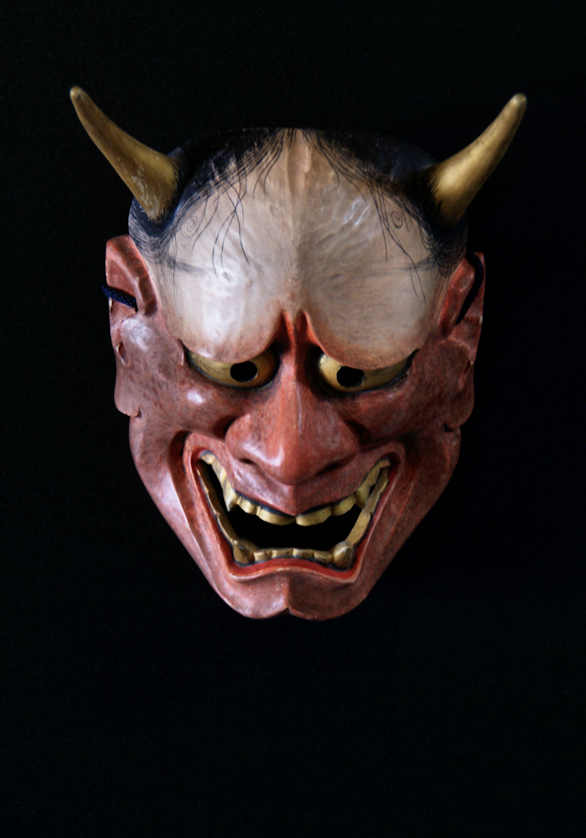 |
| The most iconic of Japanese masks, the female demon known as Hanya |
Hannya
Perhaps the most well-known Noh mask is the Hanya, or Hannya, a type of female demon. With sharp horns and teeth, and a somewhat leering mouth, Hanya masks express a range of emotions from demonic and angry to tormented and melancholic as the Hanya represents what happens to women when they are betrayed and become angry and jealous. The hanya mask is so iconic it is seen in many other forms of art and is a very popular design element in tattoos.
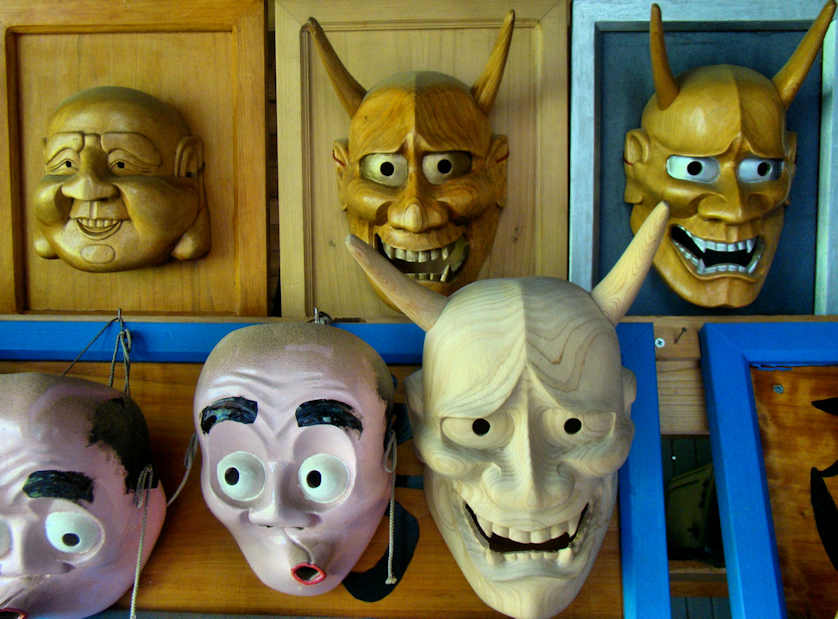 |
| A selection of wooden masks made not to be worn but displayed |
Oni Demon
The Oni mask is probably the type of mask with the widest variations across the different regions of the country. Oni is most often translated as "demon", but in fact "ogre" would probably be a better translation as in the West demons are considered pure evil, but oni, while generally doing bad, can in some cases be capable of doing good. Oni come in a variety of colors and are usually quite hairy and horned and in many stories are obviously linked with outsiders and the wild and dangerous mountains.
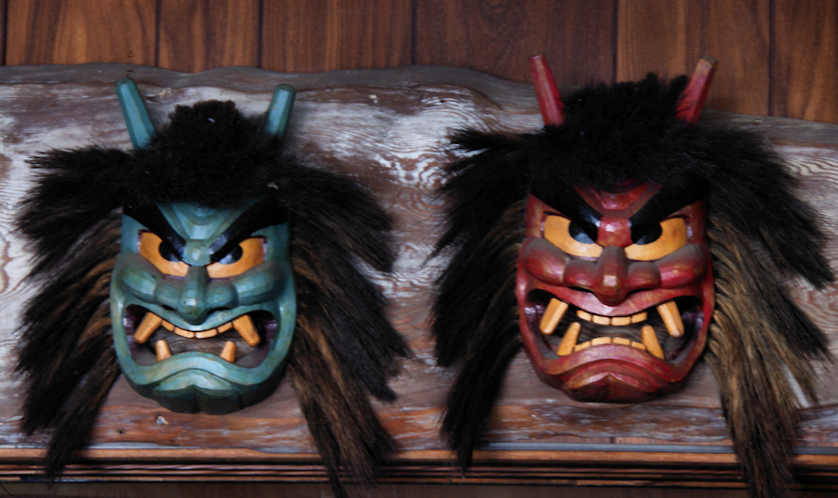 |
| Namahage demon masks from the Tohoku area of northern Japan |
Tengu
Often referred to as "forest goblins", red-faced and long-nosed Tengu are also a very common mask found throughout Japan. Earlier versions of the Tengu called Karasu Tengu, "Crow Tengu", had beaks but most nowadays have the very phallic long nose and wear a small black cap called a tokin which are worn by the mountain-dwelling ascetics called Yamabushi who spend time in the mountains gaining magical powers. Tengu and yamabushi are inextricably linked and tengu masks are very common at shrines and temples and sacred mountains connected to Yamabushi all over Japan.
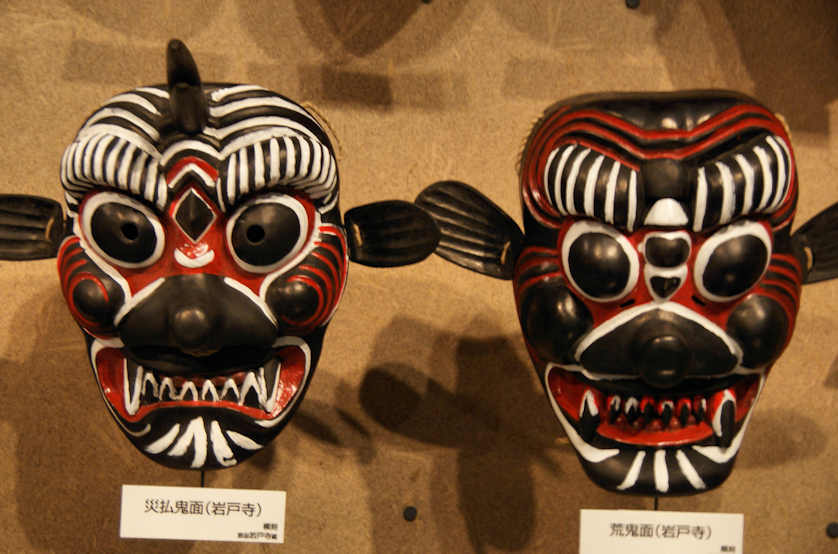 |
| Masks from the Kunisaki Peninsula in Kyushu are very striking and would not look out of place in Africa |
Sarutahiko
The development of the long-nosed Tengu from the Crow Tengu is probably linked to a character from ancient mythology called Sarutahiko. He is said to have led the imperial ancestors to Japan from the High Plain of Heaven.
Consequently a character wearing a Sarutahiko mask will usually lead a festival procession, though nowadays it may just as likely be a tengu mask. Sarutahiko married a goddess called Uzume and they are said to be the ancestors of the clan who served as theatrical performers.
She is often represented with a rather chubby, round-faced mask, and a male-female pair of Sarutahiko and Uzume masks are commonly found together. They are also used in a few of the remaining phallic festivals that remain in Japan.
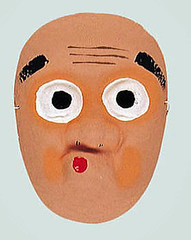
In many agricultural-based festivals and folk dances male dancers wear rather comical, simple-minded, peasant masks. Often playing the fool, he is often represented with his mouth stuck in a twisted and protruded position that comes from a character called Hyottoko whose face is stuck in that expression by blowing through a bamboo pipe to keep the coals of a forge fire going.
Masks of various kinds, especially demons, are put up in buildings to protect against various forms of misfortune, but some masks, specifically those of Daikoku and Ebisu who are two of the Seven Lucky Gods, are put up especially by businesses, to attract good fortune and success.
Purchase a Range of Traditional Masks from Japan
Purchase a selection of traditional masks from GoodsFromJapan
Jake Davies
Gallery
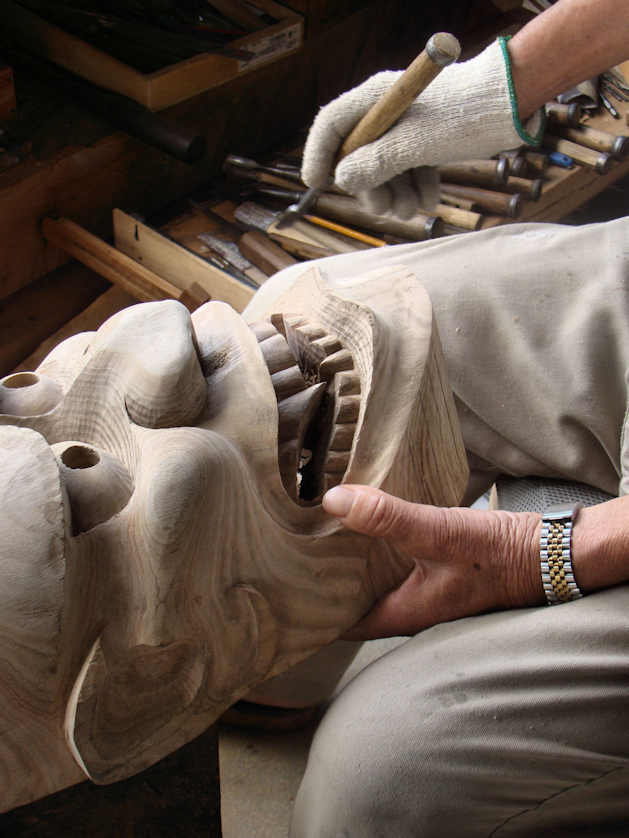 |
| A mask-maker in Oita working on a Hanya mask |
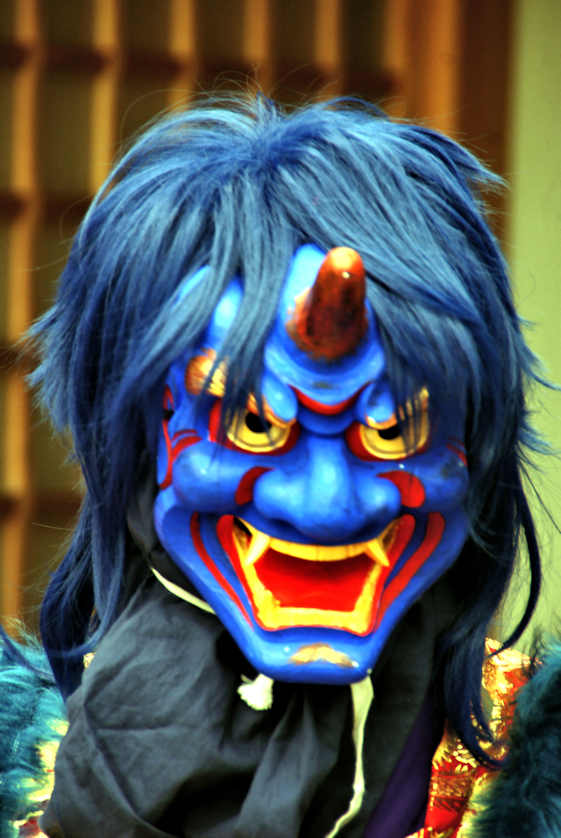 |
| Standing guard during Setsubun at a Kyoto temple, an unusual single-horned oni mask |
 |
| A variety of different Tengu masks including a Karasu Tengu, top centre |
 |
| Giant Tengu mask at Kurama, a famous yamabushi site near Kyoto |
 |
| Sarutahiko, wearing a tengu mask, leads a mikoshi parade |
 |
| Hyottoko mask worn during a rice planting festival |
Related
Aizuwakamatsu Hand Painted Candles
Daruma Dolls - History & Symbolism