Ema Japanese Votive Plaques 絵馬
Jake Davies
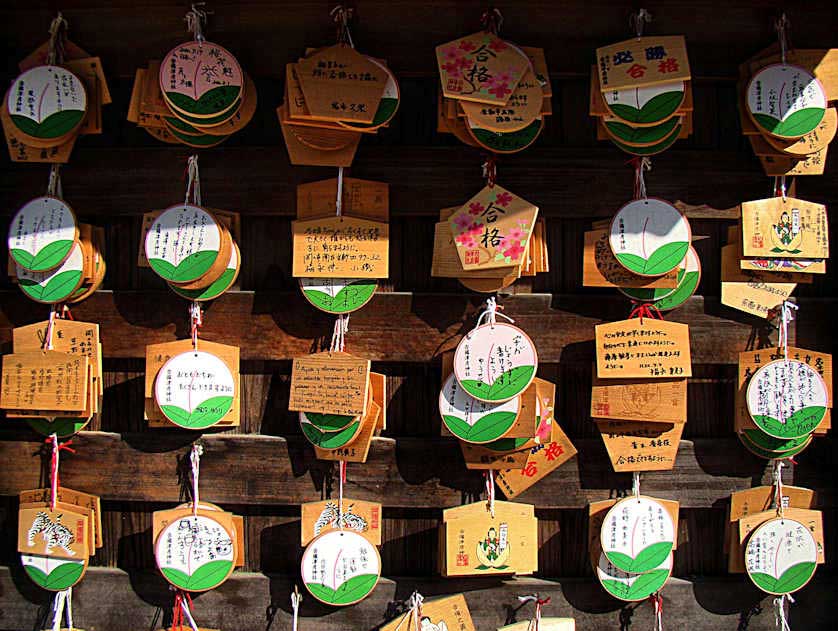 |
| A variety of differently-shaped ema hanging at a shrine |
While visiting Shinto shrines in Japan, and to a lesser extent Buddhist temples, one thing you are likely to see is a rack with numerous small, wooden plaques hanging from it.
These wooden plaques are ema, most commonly translated as "votive plaques" in English. On one side of the wooden board will usually be a picture, and on the other the person writes their prayer or wishes. One writer on Japanese popular religion has coined the phrase "postcards to the gods", to describe ema, and this seems particularly apt.
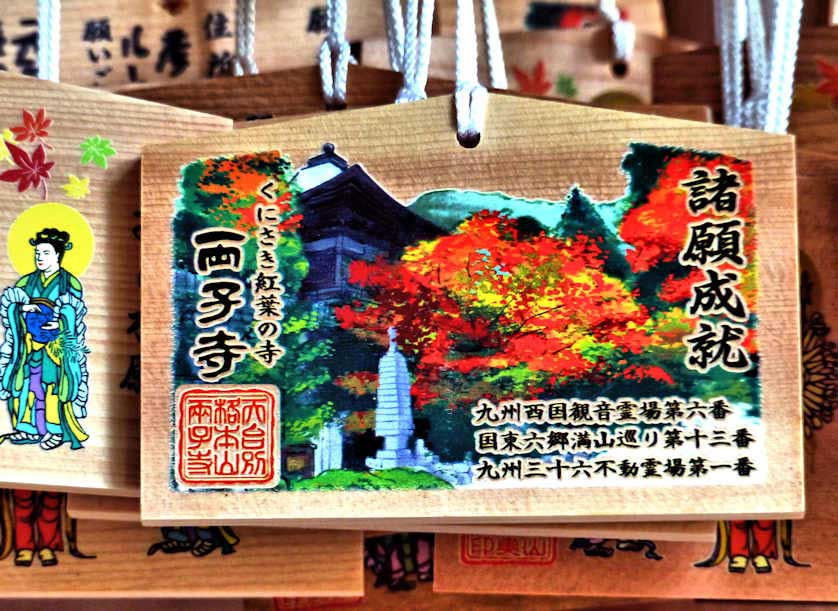 |
| An ema at Futagoji Temple in Oita with a colorful depiction of the shrine in autumn |
Pictures
Most ema will have a picture on one face, often quite colorful. Often this will be a depiction of the deity or deities enshrined in the shrine or temple, or a legend or myth associated with the temple.
Sometimes it can be a specific noteworthy feature of the shrine buildings and grounds, or famous historic figures with a connection to the shrine. Iwashimizu Hachimangu Shrine near Kyoto sells ema depicting Thomas Edison.
Many shrines are too small to produce their own ema, and so depictions of the treasure ship carrying the Seven Luck Gods are quite common. The most common ema pictures nowadays are the 12 animals associated with the Chinese zodiac and calendar, usually holding prayers and wishes for the coming year. This year 2022 is the Year of the Tiger.
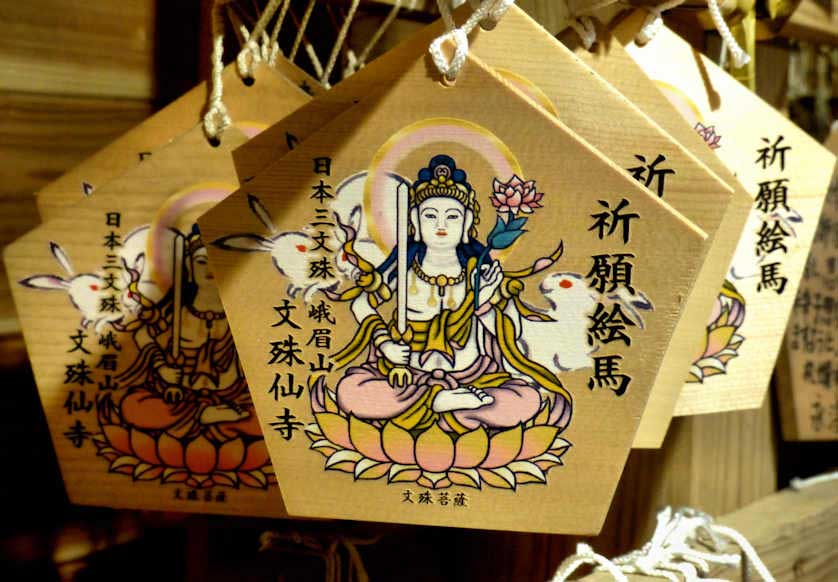 |
| Ema come in many different shapes and can be found at Buddhist temples as well as Shinto shrines |
Shape
While there are no hard and fast rules for the size and shape of ema, there is a common standard that is a 5-sided figure, imagine a rectangle about 16 cm wide with a "roof", though miniature versions can be seen, as well as larger sized.
In fact, many shrines display a giant ema of this shape during the new year with an image of the new year animal. However, a wide range of shapes can actually be found. Pentagons and circles are quite common, and irregular shapes abound: heart-shaped ema are seen at shrines connected to romantic love, ema shaped like cars are used for traffic safety prayers, and human-shaped ema are used for prayers for health, with the affected area of the body marked on the ema by the petitioner.
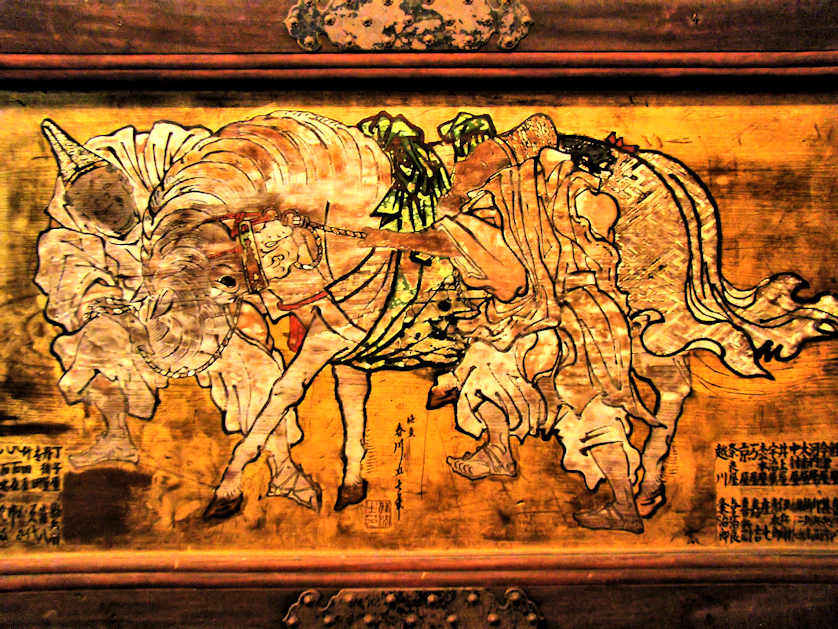 |
| Historically ema were paintings of horses |
Prayers
The prayers and wishes that are written upon the ema run across the full range of human desires, though most would fall under the category of "this-worldly" benefits, that is to say, the attraction of good fortune and the protection against misfortune.
Desires for health, wealth, and happiness, in all its varied forms, are written on ema, and the practice extends outside of the bounds of purely religious practice into cultural practice as ema are starting to appear at secular sites in Japan such as supermarkets and department stores, and ema are sometimes collected as souvenirs.
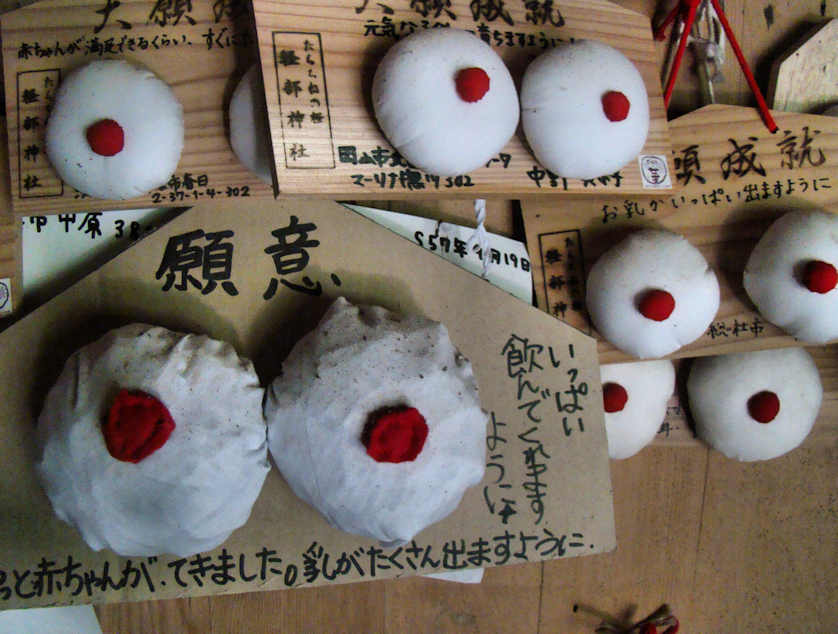 |
| These unusual ema featuring breasts are found at shrines connected to safe birth, etc |
Though specific shrines and temples are linked to specific wishes, any shrine or temple will have ema with a wide range of wishes and prayers upon them.
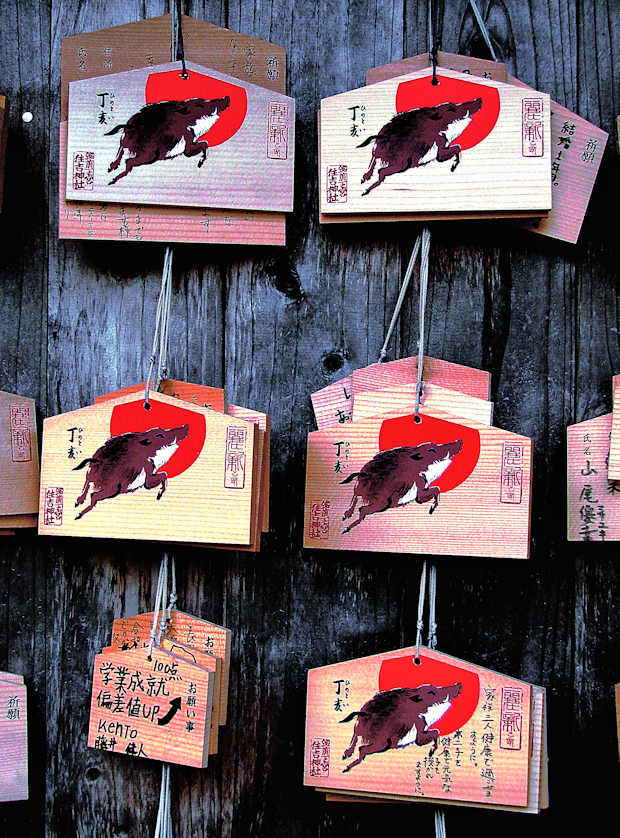 |
| Ema featuring the Chinese zodiac animal for the new year, The boar was the animal of 2019 |
Origin of Ema
The word ema means "horse picture" and refers to paintings of horses that were given to shrines as offerings. The practice grew more popular and other subjects were used in the paintings, with ships being particularly common.
Some of the larger shrines still have an Ema-do, or Ema Hall where such paintings can still be seen, though most smaller shrines have the paintings on display in the worship hall.
In Japan, horses have somewhat of a sacred character historically, as in many other cultures around the world, especially in East Asia. Kifune Shrine just north of Kyoto relates that in the 8th century the Emperor would donate a horse to the shrine, a white horse to pray for rain, and a black horse to pray for the rains to stop.
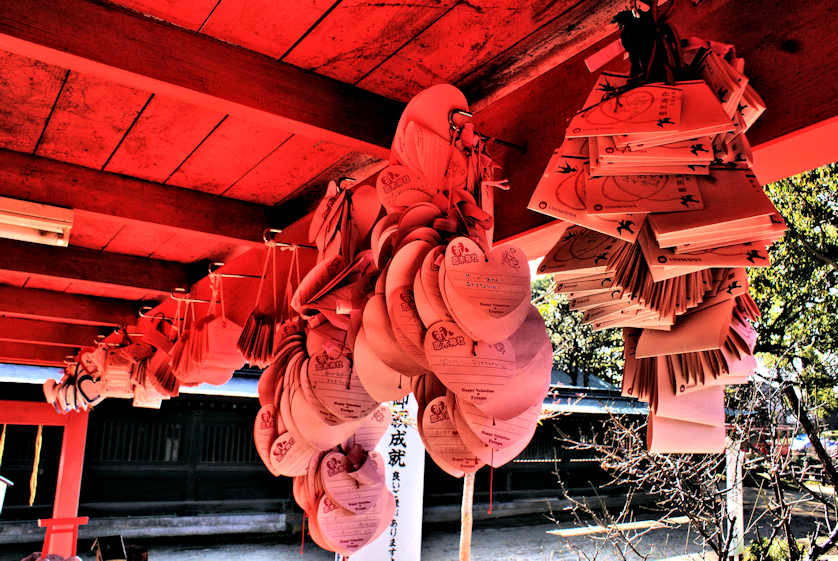 |
| Heart-shaped ema at a shrine specializing in love matches |
Statues of horses can be found at many shrines, and a wooden, white horse can often be found in its own small structure. A few shrines still have real horses. Archaeological and textual evidence suggests that in earlier, pre-Buddhist times, horses were actually sacrificed, The horse paintings, and hence the contemporary ema, developed as a much cheaper and accessible way to get the message to the gods.
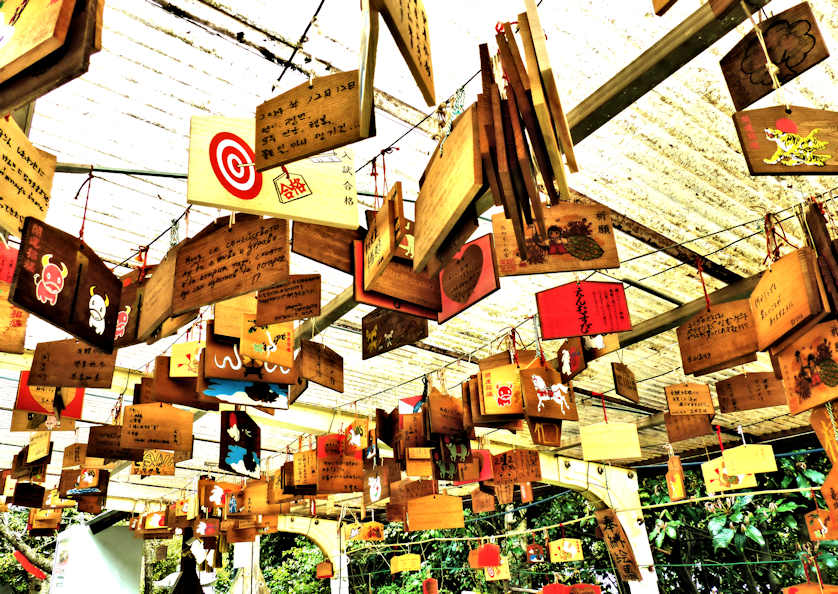 |
| At Kokawabusuna Shrine in Wakayama, a special area has been set aside to display ema put up by non-Japanese visitors |
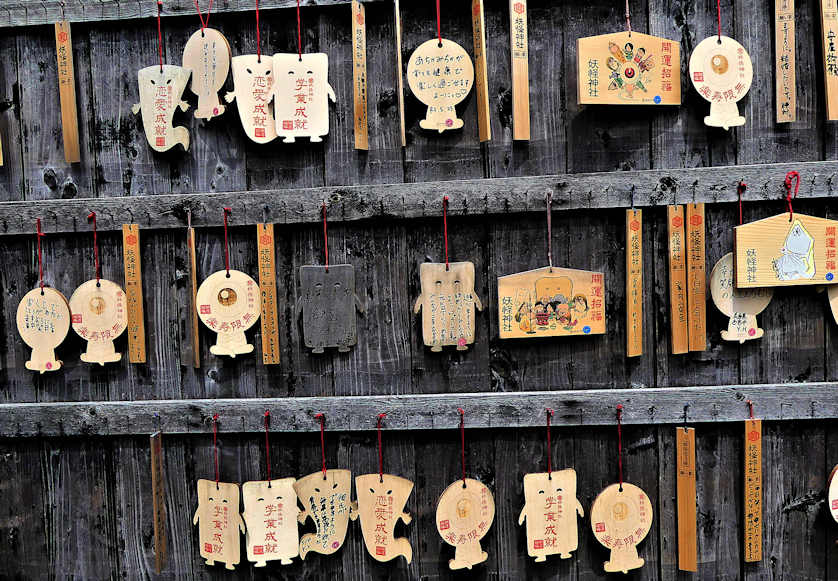 |
| Ema shaped like yokai featured in manga on display at a non-religious tourist site in Sakaiminato, Tottori |
 |
| Paintings given to shrines as offerings are the forerunners of today's ema |
Purchase Ema from Japan
Purchase a selection of ema from GoodsFromJapan
Japan SIM Cards From Mobal
Get a Japan SIM Card from Mobal
Related
Daruma Dolls - History & Symbolism
Shichimi Togarashi Seven Spices
© GoodsFromJapan.com