Friday, January 23, 2026

Japan's Longest Day Book Review

Japan Book Review: Japan's Longest Day: Intrigue, Treason and Emperor Hirohito's Fateful Decision to Surrender

Japan's Longest Day

by Kazutoshi Hando and Yukinobu Hoshino

ISBN: 978-4-8053-1779-2
Tuttle Publishing, 2023 (English version)
480 pp; paperback

In the closing days of World War II, a few days after the atomic bombings of Hiroshima and Nagasaki had completely eviscerated any faint hopes that Japan could win or even continue the war, the Japanese cabinet met to discuss and vote on the surrender of Japan and acceptance of the conditions set out in the Potsdam Conference. The vote was a tie, and nobody knew what to do or what was next.

Finally, Emperor Hirohito took decisive action, telling the cabinet members that the war had been lost and Japan would agree to the surrender terms. The fighting would end.

However, not everyone agree. In fact, some high-ranking military leaders decided to try to overthrow Hirohito and his planned surrender, continuing the war until every single Japanese was dead, if necessary. That was the only "honorable" possibility. Known historically as the Kyujo Incident, Japan's Longest Day is about this incident.

Japan's Longest Day Book Review.

The day in question was August 14-15, 1945. Hirohito's recorded announcement of surrender was to be played on the 15th. On the night of the 14th Major Kenji Hatanaka and his men spent several hours searching for Hirohito's recording, a recording which was to be played for the nation at noon the next day. Unable to find the recording, the men occupied the NHK Building in an attempt to prevent the broadcast. Hatanaka had support from some factions of the military, but not quite enough to complete his coup. He abandoned the idea, went outside and killed himself.
It is important to know that while the general story is fairly well documented, parts of this graphic novel are speculation. The author opines that Hirohito had been blackmailed from the start to not oppose the war, even though he was generally against it. Potential historical reasons are given.

Two movies have been made about the Kyujo story: The 1967 film entitled, "Japan's Longest Day" and the 2015 film entitled, "The Emperor in August." Both movies are done in Japanese.

The overly picky could point out a few minor annoyances with the manga. First, there are half a dozen or so typos. Secondly, and perhaps it is a necessity and not an annoyance, is that the reader is swamped with many names and titles to keep straight.

One interesting touch is that the manga opens backwards from Western tomes, meaning the spine is on the right, not the left; so, the manga opens like old-style Japanese books did. This add to the authentic Japanese feeling of the manga, which was originally published in Japanese.

Japan's Longest Day is a gripping look at the anatomy of political decision-making under extreme duress. It shows that wars' conclusions can be as perilous and uncertain as wars' geneses. History buffs will be intrigued.

Review by Marshall Hughes, author of Rural Reflections: What 11 Years in Provincial Japan Taught Me.

Buy this book from Amazon USA | UK | Japan

Looking to buy Japanese things directly from Japan? GoodsFromJapan is here to help.

More Japan Book Reviews

All About Japan - Stories, Songs, Crafts and Games for Kids

Exposure: From President to Whistleblower at Olympus

Japanese Kokeshi Dolls: The Woodcraft and Culture of Japan's Iconic Wooden Dolls

Japanese Dolls: The Fascinating World of Ningyo

Rural Relections

The Snow Woman

Tokyo Outdoors

Saturday, January 03, 2026

Ishigaki Sea Salt Okinawa Japan

The Taste of the Southern Seas - Ishigaki Sea Salt 石垣島

by Johannes Schonherr

Ishigaki Sea Salt, harvested from the crystal clear waters of Nagura Bay on the subtropical island of Ishigaki in the far southwest of Japan is a strong-tasting, mineral-rich salt bringing the fragrance of Japan's southern seas right to your palate.

The fragrance of a southern island famous for its coral waters, fresh seafood but also for the beef raised further inland. It's a very fine, powder-like salt produced in a small local facility - but wait, maybe we should give the salt a bit of historical context first.

Ishigaki coastline, Okinawa.
Ishigaki coastline, Okinawa

History

Driving around the Japanese countryside, you sometimes spot a vintage grocery store proudly displaying the words 酒タバコ塩 in a prominent spot next to the name of the business. Those words mean "liquor, tobacco, salt". They also signify that the business had its full accreditation afforded by the government since liquor, tobacco, and salt were under strict state control.

While this is still the case with liquor and tobacco, the Japanese government eventually relaxed the regulations in the case of salt. In 1997, the government lifted all restrictions.

Ishigaki sea salt factory.
Ishigaki sea salt factory

Soon, small privately-owned sea salt processing facilities sprang up all along Japan's coasts. Stop at any rural seaside michi-no-eki (roadside rest house featuring a permanent and often quite large local farmer's market) and you will find packages of the locally produced sea salt.

From Okhotsk Sea Salt on the northern shore of Hokkaido taken from the waters bordering Siberia all the way down the non-industrial areas of the Sea of Japan coast to Kyushu. There, Amakusa Sea Salt from the Amakusa Islands in Nagasaki is especially sort after. The scenic Japanese Inland Sea has its very own culture of producing sea salt and so does Okinawa.

With that great diversification of locally produced salts, soon a Japanese salt gourmet culture sprang up. People began to compare which salt fitted which dishes best. Salt aficionados took long tours to visit famous salt spots to build up salt collections for their kitchens - so they could choose which salt to use for which dish.

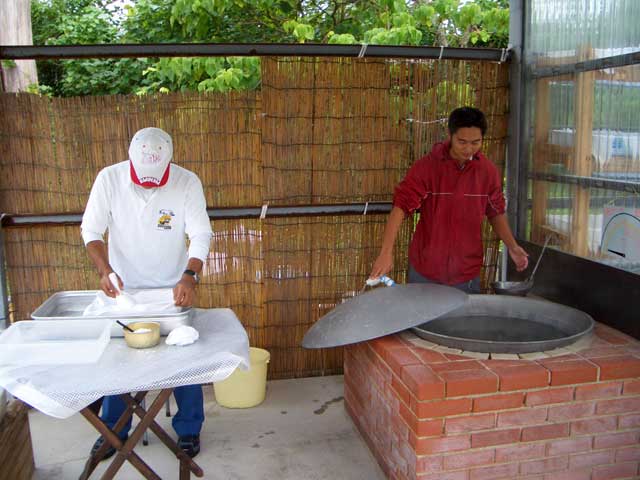
Salt cooker and salt processing by hand.
Salt cooker and salt processing by hand

Okinawa

Okinawa became the center of this salt-sampling culture. Paradise Plan, a small company producing especially mild sea salt in a flaky form named Yukishio (Snow Salt) on the island of Miyakojima, was the first to act on the trend. They opened a store named Masuya (salt store) in Naha, the capital of Okinawa, offering 120 kinds of salt sourced worldwide.

From Himalayan rock salt to North American and Mediterranean to obscure stone salts hammered out of the Argentinian Andes, the Naha Masuya had it all. Still, their focus was on local Okinawa salts. By now, you can find Masuya salt stores in Tokyo and other major Japanese cities, employing salt sommeliers who take care of all your salty needs.

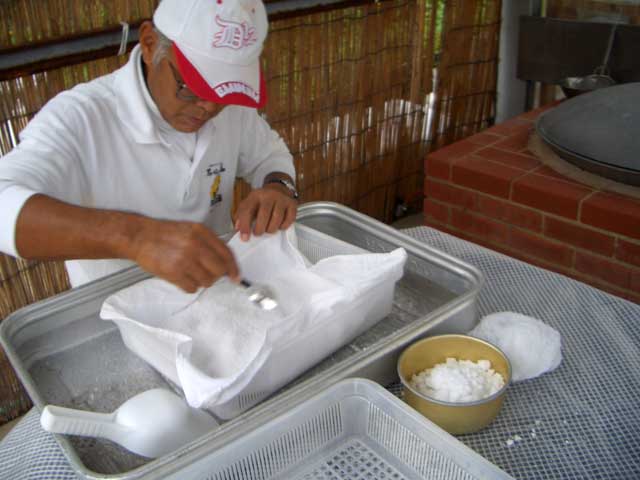
Salt cleaning by hand.
Salt cleaning by hand

Ishigaki Sea Salt

One of the most featured salts in any Masuya store is Ishigaki no Shio, Ishigaki Sea Salt from the island of Ishigaki in the Yaeyama archipelago in southern Okinawa.

Located close to Taiwan, Ishigaki has its very own traditional culture. The Yaeyama Islands were once home to 13 different languages, most of them today being considered extinct or close to it.

Walking through the market in Ishigaki City, however, you will overhear plenty of frantic haggling using speech that is decidedly neither Japanese nor Chinese. Those market ladies still make good use of those old languages academic linguists keep worrying about.

Sun drying Ishigaki salt.
Sun drying Ishigaki salt

Enter Tokuhide Togo, a native of the island. A former diver, he was always interested in what the sea had to offer. After the liberation of the salt law in 1997, he turned his occasional experiments with extracting salt from the sea into a business.

Togo's Ishigaki Salt has a much stronger taste than the Miyakojima salt and is a fine powder, applicable to everyday use and simply called Ishigaki no Shio (Ishigaki Salt).

Visitors to the small factory are welcome. There is a small on-site store selling not only the salt in its various forms but also sweets produced using the salt. Delicious stuff. Ishigaki salt cookies are highly recommended.

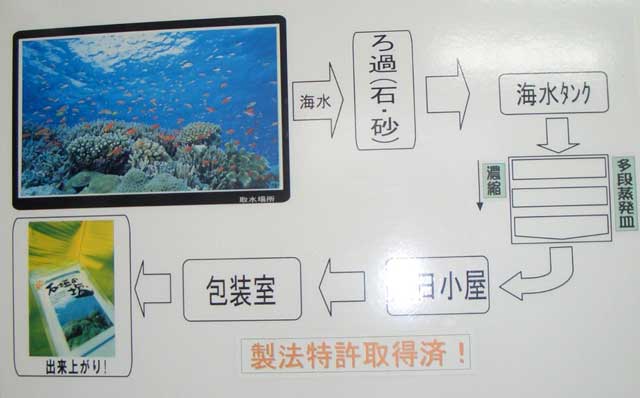
Ishigaki Sea Salt production steps.
Ishigaki Sea Salt production steps

A diagram explains, in brief, the patented manufacturing method of the salt: seawater is taken from the bay, sand and stones are filtered out, the water is collected in a tank. The water gets evaporated, thus concentrating the salt. The salt is dried in a sunlit room. Then, it's on to packing and the product is ready for sale.

Pipes take fresh water from the sea.
Pipes take fresh water from the sea

A large glass front gives you a peek inside the main processing room where you can see workers in protective gear handle the salt. Stroll down to the shore. There you see two pipes leading into the clean natural bay. Those are the pipes that take the seawater in for salt production. In the far distance, you see another, smaller but hilly island. To the right, you can see the Omoto-dake, at 526 meters the highest mountain in all of Okinawa. From there, the Nagura River flows down into the sea, assuring a constant cleaning of the water in the bay. Quite a peaceful scenery.

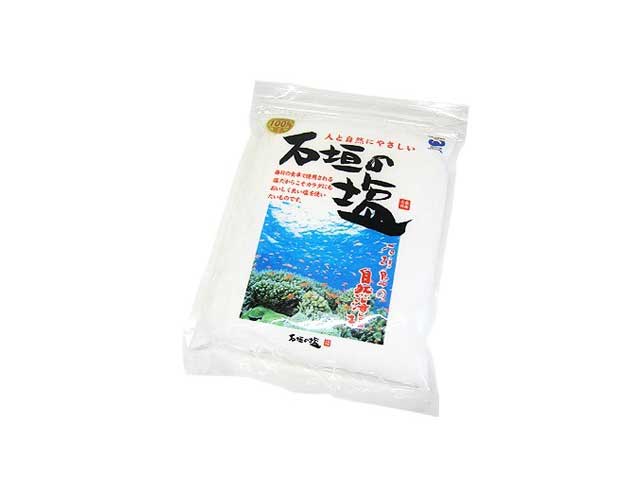
Purchase Ishigaki salt from GoodsFromJapan.com.
Purchase Ishigaki salt from GoodsFromJapan.com

Buy Ishigaki Sea Salt

While a visit to the Ishigaki Sea Salt factory is highly recommended, you can easily buy the salt online from Goods from Japan.

If you are interested in other Japanese sea salts as well, building up a small collection for your kitchen, Goods from Japan will cater to all your needs. Just contact us, we are more than happy to help.

Japan SIM Cards From Mobal

Get a Japan SIM Card from Mobal

Related

Calpis

Ema Votive Plaques

Furikake Tsukudani Rice Topping Kinshobai

Happi Coats

Hoshigaki

Japanese Mortar & Pestle Suribachi & Surikogi

Kaki no Tane

Masu Wooden Sake Boxes

Sayama Japanese Green Tea

Shichimi Togarashi

Yatsuhiro & Tatami

Yuzu Kosho Spice from Kyushu

© GoodsFromJapan.com